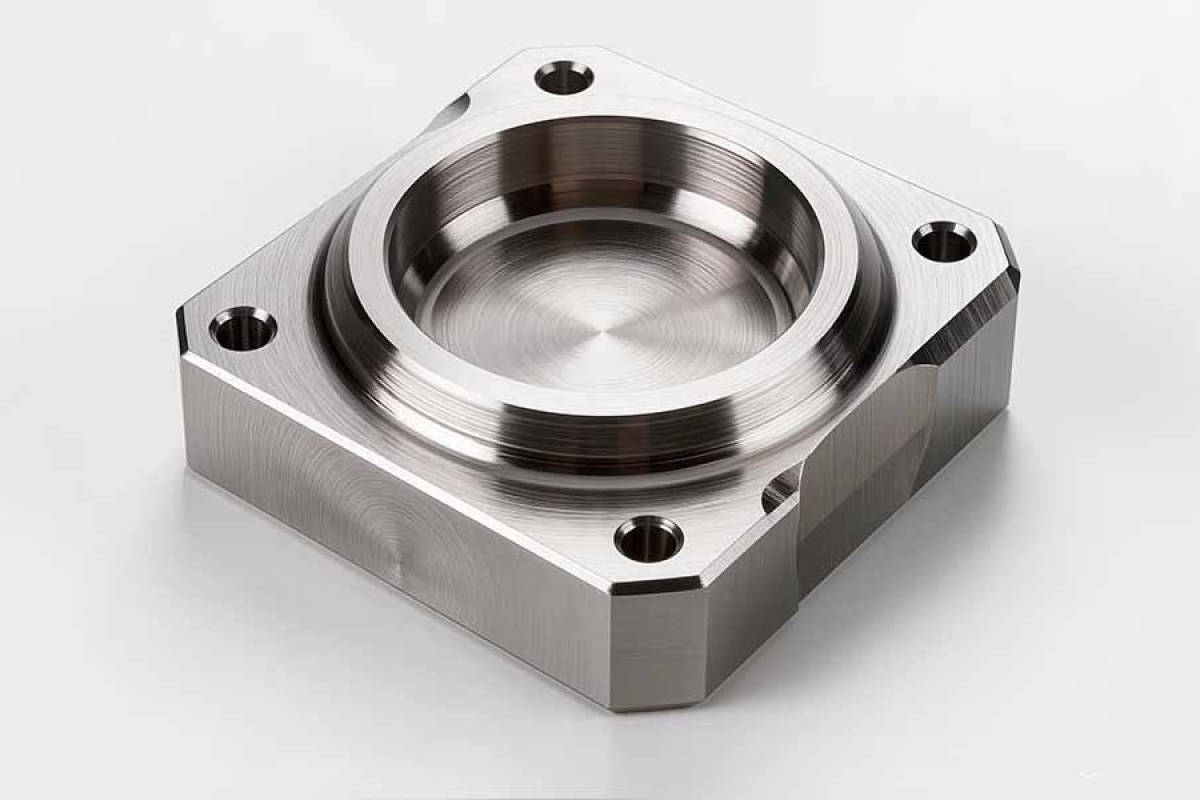
Aluminum 6061-T6 is one of the most widely used aluminum alloys for precision CNC machining. At Evefab, 6061-T6 is commonly selected for applications that require a practical balance of strength, low weight, machinability, corrosion resistance, surface finishing capability, and manufacturing cost.
This guide covers the material properties, CNC machining characteristics, typical applications, manufacturing considerations, tolerances, surface treatments, and engineering factors to consider when specifying 6061-T6 CNC machined parts.
1. Basic Material Information
What Is Aluminum 6061-T6?
Aluminum 6061-T6 is a precipitation-hardened aluminum alloy in the 6xxx series, primarily alloyed with magnesium and silicon. It is widely used for precision CNC machining, structural components, industrial equipment, automotive parts, aerospace components, and automation systems.
The T6 temper indicates that the alloy has been solution heat-treated and artificially aged to achieve a substantially higher strength level than annealed 6061-O material.
Item | Typical Information |
|---|
Material | Aluminum 6061-T6 |
Alloy family | 6000-series aluminum |
Main alloying elements | Magnesium (Mg), Silicon (Si) |
UNS | A96061 |
ASTM | ASTM B209, ASTM B211, ASTM B221 and related product standards |
EN/DIN | EN AW-6061 / AlMg1SiCu |
JIS | A6061 |
ISO | AlMg1SiCu |
Temper | T6 |
Material type | Heat-treatable aluminum alloy |
Common names | 6061 aluminum, 6061-T6 aluminum, Al 6061-T6 |
Typical CNC positioning | Excellent general-purpose precision machining alloy |
Important: Equivalent designations do not necessarily mean identical product specifications. Mechanical properties and dimensional requirements should always be verified against the applicable product standard, product form, and temper.
Why 6061-T6 Is Popular for CNC Machining
6061-T6 provides a practical balance between:
For many engineered CNC parts, it offers a better cost-to-performance ratio than higher-cost aluminum alloys such as 7075-T6 when maximum strength is not the primary requirement.
2. Physical Properties of Aluminum 6061-T6
The following values are typical engineering values, not guaranteed minimums. Actual properties vary with product form, thickness, manufacturing route, and applicable specification.
Property | Typical Value |
|---|
Density | 2.70 g/cm³ |
Tensile strength | ~310 MPa |
Yield strength | ~276 MPa |
Elongation | ~10–17% |
Elastic modulus | ~68.9 GPa |
Shear modulus | ~26 GPa |
Poisson's ratio | ~0.33 |
Thermal conductivity | ~167 W/m·K |
Specific heat | ~896 J/kg·K |
Coefficient of thermal expansion | ~23.6 µm/m·K |
Brinell hardness | ~95 HB |
Melting range | ~582–652°C |
Strength-to-Weight Ratio
With a density of approximately 2.70 g/cm³, 6061-T6 is considerably lighter than steels while providing useful structural strength.
This makes it particularly suitable for:
Lightweight brackets
Machine frames
Robot components
UAV components
Equipment housings
Heat sinks
Fixtures
Structural plates
Thermal Performance
The relatively high thermal conductivity of 6061-T6 makes it useful for components that need to transfer heat.
Typical applications include:
However, its thermal conductivity is not as high as commercially pure aluminum or specialized high-conductivity alloys.
Operating Temperature Considerations
6061-T6 should not be treated as a high-temperature structural alloy. Prolonged exposure to elevated temperatures can reduce the strength associated with the T6 temper.
For components exposed to sustained high temperatures, the actual service temperature, load, and required retained strength should be evaluated rather than relying solely on room-temperature mechanical properties.
3. Chemical Properties
Typical Chemical Composition
6061 aluminum typically contains magnesium and silicon as its principal alloying elements, with copper and other elements present in controlled quantities.
Element | Typical / Specification Range |
|---|
Aluminum (Al) | Balance |
Magnesium (Mg) | ~0.8–1.2% |
Silicon (Si) | ~0.4–0.8% |
Copper (Cu) | ~0.15–0.40% |
Iron (Fe) | ≤~0.70% |
Manganese (Mn) | ≤~0.15% |
Chromium (Cr) | ~0.04–0.35% |
Zinc (Zn) | ≤~0.25% |
Titanium (Ti) | ≤~0.15% |
Exact limits depend on the governing material specification and product form.
Corrosion Resistance
6061-T6 generally provides good atmospheric corrosion resistance because aluminum naturally forms a thin protective oxide layer.
It performs well in many:
However, corrosion resistance can be affected by:
For demanding environments, surface treatments such as anodizing, hard anodizing, powder coating, or chemical conversion coating can provide additional protection.
Weldability and Joining
6061 is generally considered weldable, particularly using processes such as TIG and MIG welding.
However, welding can locally reduce the strength of the T6 temper in the heat-affected zone. For precision assemblies, this should be considered during design and manufacturing planning.
6061-T6 is also compatible with various mechanical fastening and adhesive-bonding approaches, subject to surface preparation and application requirements.
4. CNC Machining Performance Analysis
Is 6061-T6 Easy to CNC Machine?
Yes. 6061-T6 is generally considered an easy-to-machine aluminum alloy.
For a CNC machining supplier such as Evefab, it is one of the most practical materials for:
3-axis milling
4-axis machining
5-axis machining
CNC turning
Turn-milling
Drilling
Threading
Reaming
Tapping
Its combination of relatively low hardness, good chip formation and good thermal conductivity makes it well suited to high-productivity machining.
Machining Difficulty
Difficulty: Easy
Compared with materials such as stainless steel, titanium alloys and nickel-based superalloys, 6061-T6 generally requires significantly less cutting force and causes less severe tool wear.
Recommended Cutting Tools
For production CNC machining, common choices include:
For aluminum machining, tool geometry is important. A sharp cutting edge and suitable flute geometry can help reduce:
Built-up edge
Material adhesion
Burr formation
Poor surface finish
Cutting forces
High-helix tools are often useful for efficient chip evacuation in milling applications.
Typical CNC Cutting Parameter Ranges
Actual cutting parameters should be optimized according to:
Machine spindle power
Tool diameter
Tool coating
Number of flutes
Workholding rigidity
Coolant
Depth of cut
Radial engagement
Component geometry
Representative starting ranges for carbide tooling may include:
Parameter | Typical Starting Range |
|---|
Milling cutting speed | ~200–600 m/min |
Spindle speed | Tool-diameter dependent |
Feed per tooth | ~0.03–0.15 mm/tooth |
Coolant | Flood coolant / MQL / air depending on application |
Roughing radial engagement | Geometry dependent |
Finishing DOC | Typically reduced for dimensional and surface control |
Engineering note: These values should be treated as engineering starting points rather than universal production settings. A qualified CNC programmer should optimize the actual parameters using the specific machine-tool combination.
Common Machining Problems
1. Built-Up Edge
6061 aluminum can adhere to the cutting edge when tooling, speed, lubrication or chip evacuation is poorly selected.
Solutions:
Use sharp aluminum-specific carbide tooling.
Increase cutting speed where appropriate.
Improve lubrication.
Use polished flute surfaces.
Avoid excessive tool dwell.
Ensure effective chip evacuation.
2. Burr Formation
Burrs commonly occur around:
Solutions:
Optimize cutting conditions.
Use sharp tooling.
Apply controlled tool exit strategies.
Add dedicated deburring operations.
Use edge-break requirements in the drawing.
3. Thin-Wall Deformation
Although 6061-T6 is relatively easy to machine, thin sections can deform because aluminum has a relatively low elastic modulus.
Solutions include:
Optimize workholding pressure.
Use soft jaws or conformal fixtures.
Machine symmetrically.
Leave finishing stock.
Use multiple light finishing passes.
Control heat generation.
Consider stress-relieved material for demanding components.
4. Surface Finish Problems
Poor surface finish may result from:
Using sharp tooling, rigid workholding and appropriate finishing strategies can significantly improve the final surface.
CNC Tolerances and Surface Finish
For properly designed and controlled CNC machining processes, 6061-T6 can support tight dimensional tolerances.
A general CNC manufacturing capability may be around:
±0.01–0.05 mm
Depending strongly on feature size, geometry, machine capability, inspection method and production process.
For selected critical features, tighter tolerances can be achieved through specialized process planning and secondary operations.
Typical CNC-machined surface roughness can range approximately from:
Ra 0.8–3.2 µm
Depending on the machining strategy, tooling and finishing requirements.
These are manufacturing capability ranges rather than material properties or universal guarantees.
Compatible Manufacturing Processes
6061-T6 is compatible with:
CNC milling
3-axis machining
4-axis machining
5-axis machining
CNC turning
Turn-milling
Drilling
Reaming
Tapping
Thread milling
Boring
Grinding
Surface finishing
Anodizing
High-Speed Machining
6061-T6 is particularly suitable for high-speed CNC machining because of its relatively low cutting forces and good machinability.
This makes it attractive for high-productivity production environments.
Thin-Wall Machining
6061-T6 can be used for thin-wall CNC components, but fixture design and machining sequence become critical.
A typical strategy is:
Roughing → Semi-finishing → Stress/Thermal Stabilization Where Necessary → Finishing → Inspection
For large thin plates, additional process controls may be necessary to manage residual stress and distortion.
Complex Geometry
5-axis CNC machining is well suited to 6061-T6 components with:
5-axis positioning can also reduce the number of setups, improving geometric consistency between features.
5. Typical Applications and CNC Part Examples
Aerospace and UAV
6061-T6 is commonly considered for lightweight structural and non-critical aerospace/UAV components where its strength, machinability and corrosion resistance are appropriate.
Typical components include:
Mounting brackets
Structural supports
Sensor mounts
Equipment housings
Frames
Fixtures
For flight-critical aerospace components, the required aerospace material specification and certification should be confirmed rather than assuming commercial 6061-T6 is acceptable.
Robotics and Automation
6061-T6 is highly suitable for automation equipment because it combines low weight with adequate structural stiffness for many applications.
Typical CNC parts include:
Robot brackets
End-effector components
Motor mounts
Linear-axis components
Sensor brackets
Gearbox housings
Machine bases
Custom fixtures
Automotive
Applications can include:
The material is particularly attractive for applications where weight reduction and manufacturability are more important than maximum tensile strength.
Electronics and Semiconductor Equipment
6061-T6 is also used for:
Its relatively high thermal conductivity and excellent machining characteristics make it useful for equipment structures and thermal-management components.
Industrial Equipment
Common applications include:
Machine brackets
Custom housings
Base plates
Fixtures
Jigs
Covers
Shafts
Couplings
Structural frames
Why Engineers Choose 6061-T6
Low density + good strength + good machinability + corrosion resistance + broad availability + excellent surface finishing options
This combination makes 6061-T6 one of the most versatile materials for custom CNC manufacturing.
6. Evefab Aluminum 6061-T6 CNC Machining Capabilities
For precision CNC manufacturing, successful 6061-T6 production requires more than simply selecting the correct material. At Evefab, the manufacturing process can be planned around material condition, workholding, machining sequence, dimensional inspection and surface treatment.
Material Selection and Traceability
Evefab can support 6061-T6 CNC parts with:
Material selection assistance
Material certificates
Material Test Reports (MTR)
Lot traceability
Incoming material verification
Applicable dimensional and material documentation
For regulated applications, documentation requirements can be defined before production.
Proven CNC Machining Processes
Evefab's manufacturing approach can support:
CNC milling
CNC turning
4-axis machining
5-axis machining
Turn-milling
Prototype production
Low-volume manufacturing
Medium-volume production
DFM analysis can identify potential issues with:
Precision Inspection
Depending on component requirements, inspection can include:
Calipers
Micrometers
Height gauges
Thread gauges
CMM inspection
Surface roughness measurement
Dimensional inspection reports
First Article Inspection (FAI)
For critical components, inspection planning can be established directly from the engineering drawing and GD&T requirements.
Surface Finishing
6061-T6 is particularly compatible with a wide range of post-processing options, including:
Anodizing is especially common for CNC-machined 6061-T6 components because it can improve surface appearance, wear resistance and corrosion protection.
Aluminum 6061-T6 CNC Machining: Engineering Summary
Requirement | 6061-T6 Assessment |
|---|
CNC machinability | Excellent |
Weight | Low |
Strength | Good |
Corrosion resistance | Good |
Thermal conductivity | Good |
Weldability | Good |
Surface finishing | Excellent |
High-speed machining | Excellent |
Thin-wall machining | Good with process control |
Complex 5-axis machining | Excellent |
Cost efficiency | Excellent |
Availability | Very High |
6061-T6 vs. 7075-T6
For engineers selecting an aluminum alloy, a simple distinction is useful:
6061-T6
Better overall balance of machinability, corrosion resistance, weldability and cost.
7075-T6
Significantly higher strength, but generally less favorable for welding and often more expensive.
Therefore, 6061-T6 is usually the better general-purpose CNC machining material, while 7075-T6 becomes more attractive when higher mechanical strength is the dominant requirement.
Get an Aluminum 6061-T6 CNC Machining Quote
If your project requires 6061-T6 CNC machining, provide the 3D CAD model, 2D engineering drawing, required quantity, tolerances, surface finish and target application.
Evefab can use the available engineering information to evaluate material condition, machining strategy, fixture requirements, tolerances, surface treatment, inspection requirements and production cost before manufacturing.
Contact Evefab for an Aluminum 6061-T6 CNC machining quote and DFM review for your prototype or production project.
Get an Instant Quotefor your custom Aluminum 6061-T6 parts today.