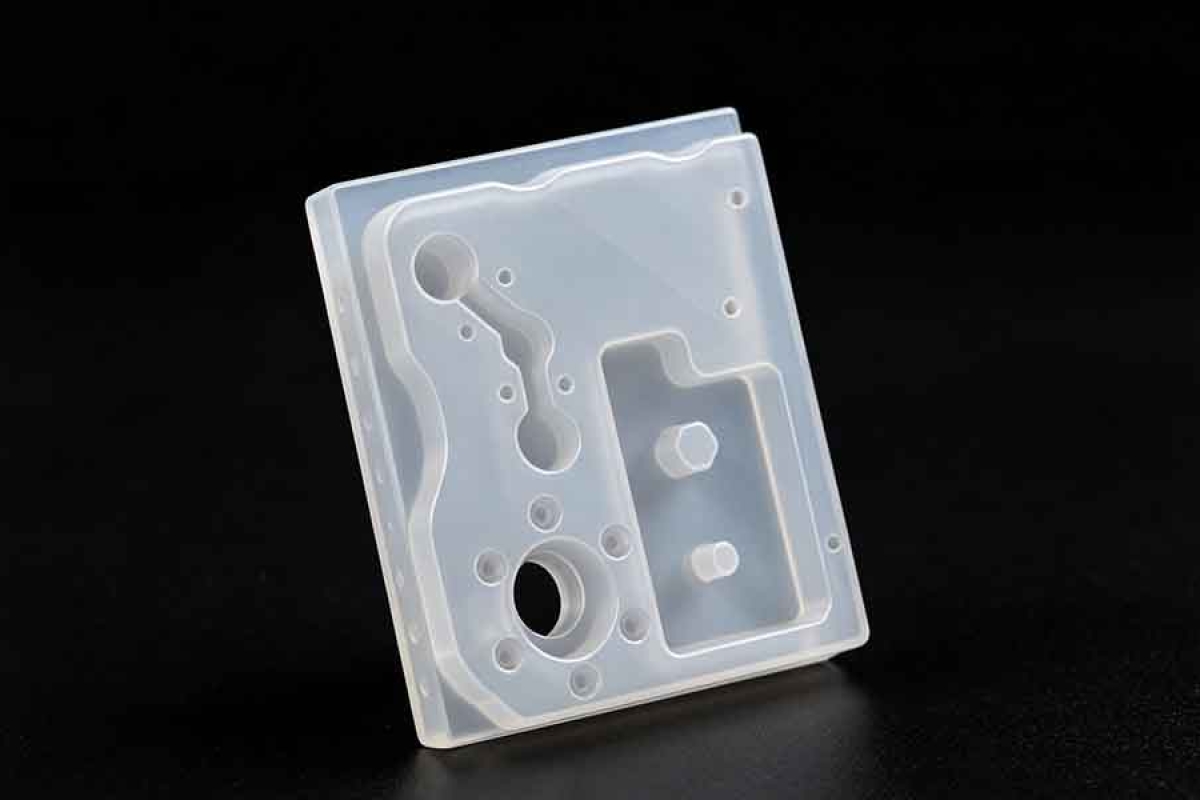
1. Basic Material Information
Standard Material Designations & Classification
Item | PC / Polycarbonate |
Chemical name | Polycarbonate |
Common abbreviation | PC |
Material category | Engineering thermoplastic |
Polymer type | Amorphous thermoplastic |
Common forms for CNC | Sheet, plate, rod, tube, block |
Typical appearance | Clear, translucent, black, white, custom colors |
Typical manufacturing processes | CNC machining, injection molding, extrusion, thermoforming |
Relevant standard | ISO 7391; ASTM D3935 |
Common applications | Automotive, electronics, automation, medical, aerospace, machine guarding |
PC does not have a universal metal-style UNS designation.
For procurement, the material specification should ideally include:
What Is Polycarbonate?
Polycarbonate is an amorphous engineering thermoplastic containing carbonate groups in its polymer backbone.
Its most important engineering characteristics include:
Very high impact resistance
High toughness
Good transparency
Good dimensional stability
Moderate-to-high temperature resistance
Low density
Good electrical insulation
Compared with PMMA, PC is generally much more impact resistant. Compared with POM, PC is more suitable for transparent and impact-resistant components, but generally has poorer wear and friction performance.
Core Market Positioning
PC is often selected when engineers need a combination of: Transparency + toughness + impact resistance + moderate temperature capability.
This makes it particularly suitable for:
2. PC Physical Properties
Property | Typical PC Range |
Density | ~1.18–1.22 g/cm³ |
Tensile strength | ~55–75 MPa |
Tensile modulus | ~2.0–2.5 GPa |
Yield strength | ~55–70 MPa |
Elongation at break | ~80–150%+ |
Flexural modulus | ~2.0–2.5 GPa |
Hardness | Typically Rockwell M70–M85 |
Water absorption | ~0.1–0.3% |
Thermal conductivity | ~0.19–0.25 W/m·K |
Glass transition temperature | ~140–150°C |
Continuous service temperature | Commonly ~100–120°C |
Visible light transmission | Up to ~88–90% for clear grades |
These are typical engineering values, not guaranteed specification limits.
Density
PC has a density of approximately 1.18–1.22 g/cm³. It is significantly lighter than aluminum and much lighter than steel.
This makes it attractive for:
Tensile Strength & Stiffness
General-purpose PC typically provides tensile strength around 55–75 MPa and tensile modulus around 2.0–2.5 GPa. Although its stiffness is lower than many metals, PC combines moderate stiffness with unusually high toughness. This allows engineers to design parts that can withstand impact without brittle fracture.
Impact Resistance
Impact resistance is the defining advantage of polycarbonate. PC is considerably tougher than PMMA and many other transparent plastics.
This makes it useful for:
However, "impact resistant" does not mean "unbreakable." Temperature, thickness, notch geometry, chemical exposure and grade can significantly affect impact performance.
Elongation & Toughness
PC can undergo substantial deformation before failure. Typical elongation at break can exceed 80% for many unfilled grades. This high ductility helps PC tolerate impact, bending, vibration and mechanical shock. It also means that clamping and machining forces can deform thin sections more readily than expected.
Temperature Performance
PC has a glass transition temperature around 140–150°C, considerably higher than PMMA and ABS. Practical continuous service temperatures are commonly around 100–120°C, depending on grade and load.
At elevated temperature, engineers should still account for creep, thermal expansion, reduced stiffness and dimensional change. For continuous exposure above approximately 120°C, a higher-temperature polymer may be worth evaluating.
Dimensional Stability
PC generally offers good dimensional stability. However, it has a relatively high coefficient of thermal expansion compared with metals. For precision CNC parts, dimensional inspection should consider part temperature, machine temperature, inspection environment, feature size and thermal cycling, especially when a PC component interfaces directly with aluminum or steel.
Wear Resistance
Standard PC has moderate wear resistance. It is not normally the preferred material for high-cycle bushings, sliding bearings, high-load gears and abrasive wear components. POM, nylon or specialized tribological polymers may provide better performance.
3. PC Chemical Properties
Chemical Composition
Polycarbonate is a polymer containing carbonate functional groups. Commercial PC formulations can additionally contain UV stabilizers, flame retardants, pigments, glass fiber, mineral fillers and processing modifiers. The exact formulation should be confirmed through the supplier's technical documentation.
Chemical Resistance
PC has useful resistance to dilute acids, dilute alkalis, water, selected oils and some hydrocarbons. However, PC is sensitive to many organic solvents including aromatic hydrocarbons, ketones, esters, strong alkaline solutions and some chlorinated solvents.
These aggressive chemicals may cause stress cracking, crazing, softening, loss of impact strength and surface damage. Chemical compatibility must be evaluated at the actual operating temperature and concentration.
Stress Cracking
Stress cracking is a particularly important consideration for machined PC. A part can appear dimensionally correct after machining and later develop cracks when exposed to chemicals while under residual stress.
Risk factors include tight press fits, excessive clamping, sharp internal corners, aggressive machining, chemical cleaners and elevated temperature. For critical components, reducing residual stress during machining and assembly is essential.
UV Resistance
Standard PC can degrade under long-term UV exposure, leading to yellowing, reduced impact strength, surface degradation and loss of optical performance. UV-stabilized PC grades are strongly recommended for outdoor and long-term exposed applications.
Flame Retardancy
Flame-retardant PC grades are available for electrical and electronic applications. However, flame rating is strictly grade-specific. Engineers cannot assume generic PC meets UL 94 or other fire safety standards — exact grade and certification must be specified for compliance projects.
Welding & Bonding
PC supports multiple joining methods, including mechanical fastening, ultrasonic welding, vibration welding, heat staking, solvent bonding and adhesive bonding. For transparent PC parts, bonding quality directly impacts optical clarity, residual stress, surface appearance and long-term structural durability.
4. PC CNC Machinability Analysis
Machining Difficulty: Moderate
PC is fully machinable via CNC milling, turning and drilling, yet requires stricter process control than POM. Its high ductility, heat accumulation tendency, burr generation, scratching sensitivity, residual stress and thin-wall deformation risk make precise, high-quality PC machining process-dependent. For clear optical PC components, surface cosmetic control becomes a core manufacturing requirement.
Recommended Cutting Tools
Optimal tool selection directly determines PC machining quality. Recommended tools include sharp carbide end mills, polished carbide cutters, single-flute/O-flute plastic cutters and sharp plastic-specific drills. Cutting edges must stay razor-sharp — dull tools cause rubbing friction, heat buildup, material melting and residual stress.
Ideal tool features: positive rake angle, ultra-sharp cutting edge, polished flute surface, excellent chip evacuation and low rubbing resistance.
General CNC Cutting Parameter Guidance
The following values are reliable starting ranges for unfilled PC, adjustable based on tool size, spindle speed, part structure and surface requirements.
Parameter | Typical Starting Range |
Cutting speed | ~150–400 m/min |
Feed per tooth | ~0.05–0.20 mm/tooth |
Tool | Sharp carbide |
Coolant | Air blast or compatible coolant |
Chip evacuation | High priority |
Finishing | Light finishing pass |
CNC Milling PC
PC performs excellently in contouring, pocketing, slotting, drilling, 3D machining and engraving. For transparent PC parts, efficient chip removal via air blast is critical to avoid chip scratch marks on optical surfaces. Optimized tool paths eliminate repeated chip friction and ensure clear, flawless surface results.
CNC Turning PC
CNC turning is widely used to produce transparent sleeves, bushings, rings, cylindrical covers, spacers and optical housings. Excessive cutting heat will cause cloudiness, melting, burrs and dimensional drift. Sharp tooling and stable, low-heat cutting parameters are mandatory for high-quality turned PC parts.
Drilling PC
PC drilling requires precise feed control, especially at hole breakthrough. Common defects include cracking, burrs, material melting, oversized holes and stress concentration. Gradual feed reduction before breakthrough and plastic-specific drill geometry greatly improve hole edge quality and precision.
Tapping PC
PC can be tapped for moderate-load internal threads. For high-load, frequent disassembly or high-temperature working scenarios, threaded inserts are recommended to enhance thread durability and avoid thread wear or failure.
Common PC CNC Machining Problems
1. Melting Caused by excessive spindle speed, dull tools, low feed rate, poor chip evacuation and tool rubbing. Solutions: replace sharp carbide tools, optimize speed/feed parameters, strengthen air blast and ensure smooth chip removal.
2. Burr Formation PC’s high ductility easily generates burrs on hole exits, thin walls, slots and outer edges. Sharp tools and dedicated light finishing passes effectively reduce burrs and eliminate secondary manual polishing workload.
3. Thin-Wall Deformation Elastic and tough PC thin walls deform easily under rigid clamping. Solutions: soft jaws, vacuum fixtures, uniform distributed clamping force and structural support during machining.
4. Scratching Clear PC is highly scratch-sensitive. Strict production control including reserved protective film, clean fixtures, dust-free working environment and independent protective packaging ensures flawless cosmetic quality.
5. Stress Cracking Machining residual stress coupled with chemical exposure causes delayed cracking. Avoid over-clamping and sharp inner corners, adopt low-stress machining processes and verify chemical compatibility for end-use environments.
CNC Tolerance Capability
With standardized process control, PC CNC machining stably achieves ±0.05 mm precision on regular features. Stable rigid geometries can support tighter tolerances. Engineers are recommended to apply GD&T critical feature marking instead of full-range ultra-tight tolerance requirements to balance precision and cost.
Surface Finish
CNC-machined PC reaches Ra 0.8–3.2 μm surface finish based on tool condition and finishing strategy. Note that machined smoothness does not equal optical clarity. Clear PC optical parts require additional fine sanding, mechanical polishing or flame polishing to achieve high-transparency cosmetic standards.
5. Typical PC Applications & Part Scenarios
Industrial Automation
PC is widely used for machine safety guards, transparent equipment covers, sensor covers, inspection windows, protective housings and control enclosures, serving as a tough alternative to brittle PMMA for industrial safety protection components.
Robotics
CNC machined PC covers robot protective shells, sensor windows, lightweight housings, transparent safety guards and cable protection parts, providing lightweight and impact-resistant structural protection for robotic equipment prototypes and formal assemblies.
Automotive
Common automotive PC components include transparent protective covers, sensor housings, lighting prototype parts, interior structural components, electronic enclosures and protective structural parts. Mass-production automotive parts require certified automotive-grade PC materials.
Electronics & Electrical
With excellent insulation and flame-retardant customizable performance, PC is ideal for electrical enclosures, connector housings, instrument panels, sensor shells and insulating components for consumer and industrial electronic equipment.
Medical Equipment
Medical-grade PC is applied for transparent equipment covers, instrument housings, diagnostic device components, protective guards and laboratory parts, supporting repeated disinfection and cleaning in medical environments with stable physical performance.
Machine Safety
Thanks to industry-leading impact resistance among transparent plastics, PC is the preferred material for machine windows, safety guards, protective shields, inspection doors and operator viewing panels, meeting industrial machine safety standards.
Lighting & Optical Applications
Clear PC is used for light covers, diffusers, optical housings and LED protective lenses. It balances impact resistance and light transmittance, complementing PMMA’s superior UV resistance and optical fineness for different lighting application scenarios.
6. Our PC CNC Machining Advantages
Professional Material Selection
Evefab’s engineering team provides one-stop PC material selection guidance, matching general-purpose PC, clear optical PC, UV-stabilized PC, flame-retardant PC and glass-filled PC grades according to impact demand, transparency standard, working temperature, chemical environment, UV exposure and flame resistance requirements.
Proven CNC Machining Process
At Evefab, we have mature standardized PC machining processes to strictly control tool sharpness, cutting heat, chip evacuation, workholding method, burr generation, surface protection and residual stress. For transparent optical PC parts, we implement exclusive cosmetic quality control standards to ensure zero scratch, zero cloudiness and uniform edge quality.
Precision CNC Manufacturing
We support high-precision CNC machining and full GD&T inspection for critical PC features including hole diameter, flatness, parallelism, position accuracy, profile and concentricity, delivering consistent precision for prototype and batch production.
Transparent-Part Manufacturing
Evefab specializes in high-quality clear PC component production, with strict control over tool marks, surface scratches, fogging and edge defects. We provide professional post-polishing and optical finishing services to meet high-standard transparent equipment and visual part requirements.
Prototype to Batch Production
Evefab supports flexible production from PC functional prototypes, engineering verification samples, low-volume pilot runs to formal batch mass production. Custom fixtures and optimized toolpaths ensure stable repeatability and cost-effective mass manufacturing.
Quality Inspection & Material Documentation
We provide complete dimensional inspection, GD&T verification, visual cosmetic inspection and material test reports. Every batch of PC parts from Evefab undergoes strict quality control to ensure compliance with design and industry standards.
PC CNC Machining Material Selection Summary
Requirement | PC Suitability |
CNC milling | Excellent |
CNC turning | Good–Excellent |
Drilling | Good |
Impact resistance | Excellent |
Toughness | Excellent |
Transparency | Excellent |
Dimensional stability | Good |
Wear resistance | Moderate |
Chemical resistance | Moderate |
UV resistance | Grade-dependent |
High-temperature performance | Good |
Outdoor applications | Good with suitable grade |
Machine guards | Excellent |
Transparent housings | Excellent |
Electrical insulation | Excellent |
Thin-wall machining | Moderate |
Adhesive bonding | Good with appropriate process |
Cost efficiency | Good |
PC vs. PMMA vs. POM vs. Nylon
Property | PC | PMMA | POM | Nylon |
Transparency | Excellent | Excellent | Poor | Poor |
Impact resistance | Excellent | Moderate | Good | Excellent |
Machinability | Good | Good | Excellent | Excellent |
Wear resistance | Moderate | Low–Moderate | Excellent | Excellent |
Dimensional stability | Good | Good | Excellent | Moderate |
UV resistance | Grade-dependent | Excellent | Limited | Grade-dependent |
Temperature capability | Good | Moderate | Moderate | Good |
Chemical resistance | Moderate | Moderate | Good | Good |
Low friction | Moderate | Low | Excellent | Good |
Optical appearance | Excellent | Excellent | Poor | Poor |
Safety guards | Excellent | Good | Not suitable | Not typical |
Gears/bushings | Limited | Limited | Excellent | Excellent |
Final Engineering Recommendation
PC is an excellent CNC machining material when impact resistance, toughness, transparency, low weight and moderate temperature capability are required in the same component. It is particularly well suited to machine guards, transparent housings, sensor covers, electrical enclosures, automotive components and industrial equipment.
The key distinction for material selection is often PC vs. PMMA: Choose PC when impact resistance and toughness are priorities; Choose PMMA when optical clarity, surface appearance and UV/weather resistance are more important; Choose POM when low friction and wear resistance are core demands; Choose Nylon for cost-effective high-toughness mechanical parts.
For procurement engineers, specify the exact PC grade, transparency/color, UV requirement, flame rating, reinforcement and operating environment rather than simply specifying "polycarbonate."
Contact Evefab for a CNC machining quote and DFM consultation for custom PC/polycarbonate components, including material-grade selection, transparent-part machining, precision tolerances, surface-quality control and batch-production planning.
Get an Instant Quotefor your custom Polycarbonate parts today.