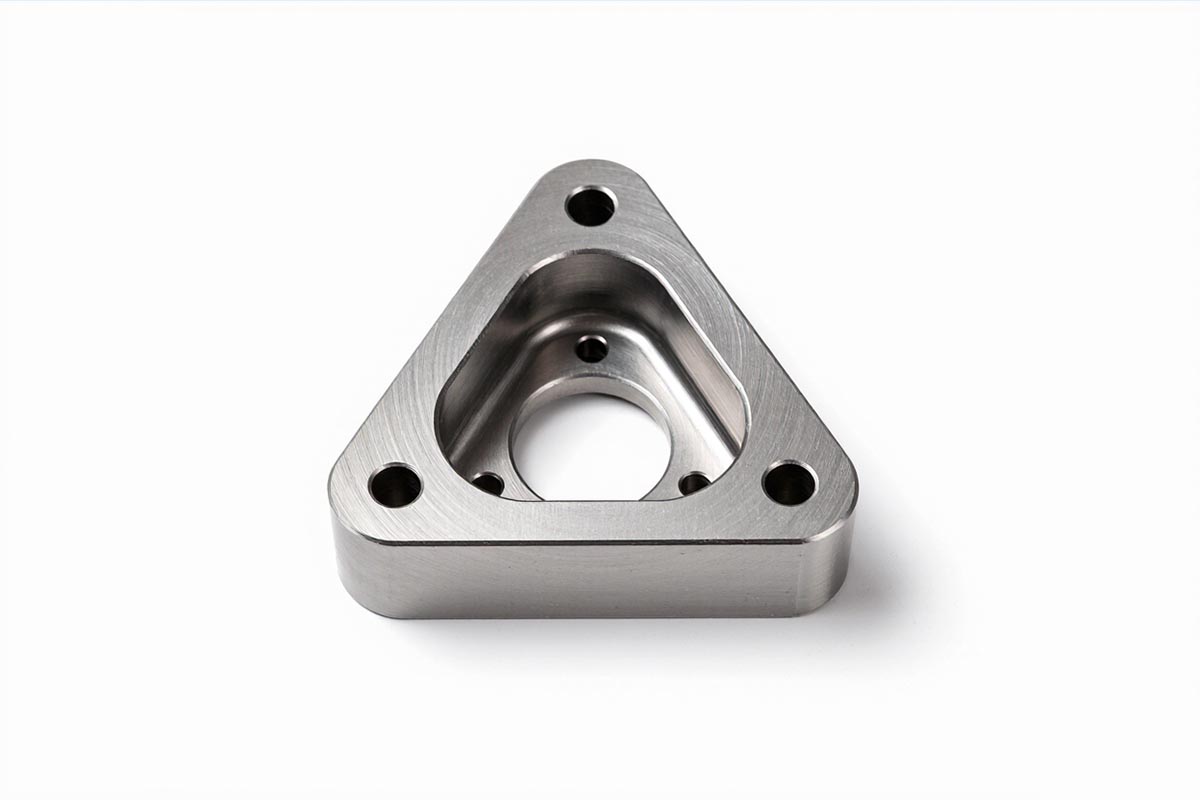
304 Stainless Steel: Composition, Properties, Corrosion Resistance, Machining and Applications
Material Category: Austenitic Stainless Steel
Material Grade: AISI 304 / ASTM Type 304
UNS Number: S30400
European Grade: EN 1.4301
Chinese Grade: 06Cr19Ni10 / S30408
Japanese Grade: SUS304
Common Name: 18/8 Stainless Steel
Primary Alloying Elements: Chromium (Cr), Nickel (Ni) and Iron (Fe)
Primary Manufacturing Processes: CNC Milling, CNC Turning, Drilling, Welding, Sheet Metal Fabrication, Stamping, Grinding and Polishing
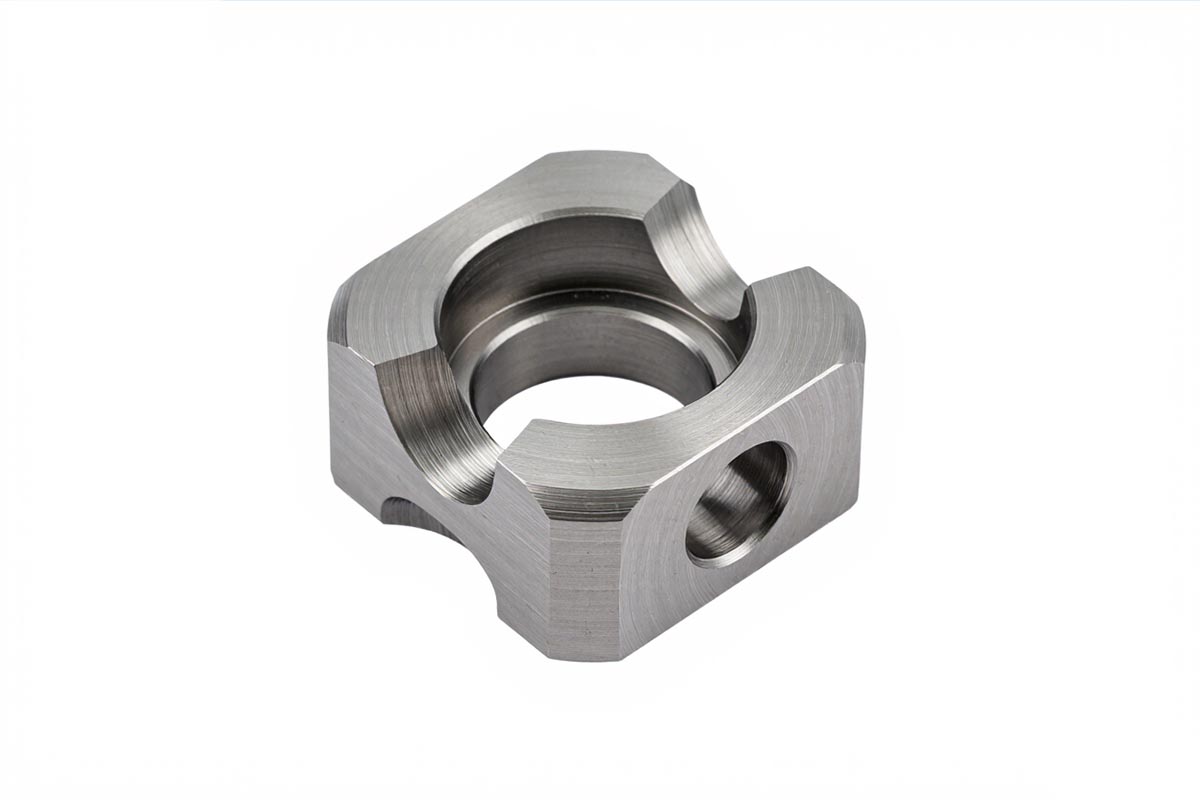
1. What Is 304 Stainless Steel?
304 stainless steel is an austenitic chromium-nickel stainless steel known for its excellent combination of corrosion resistance, mechanical strength, formability, weldability and durability. It typically contains approximately 18% chromium and 8% nickel, which is why it is commonly referred to as 18/8 stainless steel.
It is one of the most widely used stainless steel grades in the world, serving applications across food processing, medical equipment, chemical processing, automotive manufacturing, construction, industrial machinery and consumer products.
The corrosion resistance of 304 stainless steel comes primarily from chromium. When exposed to oxygen, chromium forms an extremely thin, stable, protective oxide film on the material's surface. This passive film helps prevent further oxidation and can naturally reform when the surface is exposed to suitable conditions.
Nickel stabilizes the austenitic microstructure, contributing to the material's excellent ductility, toughness, formability and general corrosion resistance.
From a manufacturing perspective, 304 stainless steel is relatively easy to form, weld and fabricate. However, it can be challenging to machine because of its high work-hardening rate, relatively low thermal conductivity and tendency to produce long, continuous chips.
These characteristics make correct material selection, cutting tool geometry, machine rigidity and machining parameters especially important when manufacturing precision CNC components.
2. 304 Stainless Steel Grade Identification and Equivalent Standards
304 stainless steel is identified differently across international material standards.
Standard System | Material Designation |
|---|
AISI / ASTM | Type 304 |
UNS | S30400 |
EN | 1.4301 |
European Grade Name | X5CrNi18-10 |
JIS | SUS304 |
Chinese GB | 06Cr19Ni10 |
Chinese Unified Number | S30408 |
Common Industry Description | 18/8 Stainless Steel |
These designations are commonly used to identify corresponding versions of 304 stainless steel.
However, equivalent material designations do not automatically guarantee identical chemical composition, mechanical properties or product requirements. Different standards may specify slightly different limits depending on the product form and applicable specification.
For international procurement, engineers should confirm the material certificate, governing standard, delivery condition and product form rather than relying solely on the commercial grade name.
3. Chemical Composition of 304 Stainless Steel
The chemical composition of 304 stainless steel determines its corrosion resistance, mechanical behavior, microstructure, fabrication characteristics and suitability for different industrial environments.
Its principal alloying elements are chromium and nickel, while iron forms the remaining balance.
3.1 Standard Chemical Composition
The following table presents commonly referenced Type 304 composition limits for ASTM A240 plate, sheet and strip. Other product specifications and standards may use slightly different limits.
Chemical Element | Symbol | Composition (Weight %) | Primary Function |
|---|
Carbon | C | ≤0.08 | Influences strength and carbide precipitation |
Chromium | Cr | 18.0–20.0 | Provides corrosion and oxidation resistance |
Nickel | Ni | 8.0–10.5 | Stabilizes austenitic structure and improves toughness |
Manganese | Mn | ≤2.00 | Supports deoxidation and contributes to alloy strength |
Silicon | Si | ≤1.00 | Acts as a deoxidizer and improves oxidation resistance |
Phosphorus | P | ≤0.045 | Controlled residual element |
Sulfur | S | ≤0.030 | Controlled residual element |
Iron | Fe | Balance | Primary base metal |
Some producer datasheets and product specifications publish tighter or different limits. For example, ATI's 304 product data lists maximum carbon of 0.07% and chromium between 17.5% and 19.5% for its covered products. Always check the applicable material specification and mill test certificate.
Source references: Australian Stainless Steel Development Association and ATI.
3.2 The Functions of Important Alloying Elements
Chromium (Cr): The Foundation of Corrosion Resistance
Chromium is the most important alloying element responsible for the stainless properties of 304.
Its main functions include:
Promoting the formation of a chromium-rich passive oxide layer.
Improving resistance to atmospheric oxidation and general corrosion.
Increasing resistance to many industrial chemicals and food-processing environments.
Improving oxidation resistance at elevated temperatures.
Without sufficient chromium, stainless steel would not develop the protective passive behavior associated with this material family.
Nickel (Ni): Austenite Stabilization
Nickel is responsible for stabilizing the austenitic microstructure of 304 stainless steel.
Its contributions include:
Improving toughness and ductility.
Supporting excellent cold-forming and deep-drawing characteristics.
Improving resistance to many corrosive environments.
Maintaining good mechanical performance at low temperatures.
Reducing the tendency toward brittle behavior.
Carbon (C): Strength and Sensitization
Carbon contributes to the strength of stainless steel but can also influence corrosion behavior after exposure to certain temperature ranges.
During welding or prolonged elevated-temperature exposure, chromium carbides may precipitate along grain boundaries. This can reduce the chromium available in adjacent regions and increase susceptibility to intergranular corrosion.
This is one reason 304L, a low-carbon version of 304, is often preferred for welded components.
Manganese (Mn) and Silicon (Si)
Manganese and silicon primarily contribute to steelmaking and metallurgical control.
Manganese helps manage sulfur-related effects and supports deoxidation. Silicon acts as a deoxidizer and contributes to oxidation resistance.
3.3 Why Is 304 Stainless Steel Called 18/8 Stainless Steel?
The name 18/8 refers to the approximate chromium and nickel content:
These two alloying elements give 304 its characteristic combination of corrosion resistance, ductility and formability.
The expression 18/8 is an industry description rather than a complete chemical specification. Actual composition must be established by the applicable material standard.
4. Physical Properties of 304 Stainless Steel
The physical properties of 304 stainless steel are important for structural design, CNC machining, thermal calculations, dimensional stability and industrial component manufacturing.
4.1 Basic Physical Properties
Physical Property | Typical Value | Unit |
|---|
Density | 7.90 | g/cm³ |
Density | 7,900 | kg/m³ |
Melting Range | Approximately 1,400–1,450 | °C |
Elastic Modulus | Approximately 200 | GPa |
Poisson's Ratio | Approximately 0.29–0.30 | — |
Thermal Conductivity at 20°C | 15 | W/(m·K) |
Specific Heat Capacity at 20°C | 500 | J/(kg·K) |
Thermal Expansion, 20–100°C | 16.0 × 10⁻⁶ | K⁻¹ |
Electrical Resistivity at 20°C | 0.73 | Ω·mm²/m |
These are representative reference values, not universal guaranteed values for every manufactured product. Actual values can vary with temperature, composition and material condition.
Reference: Outokumpu Core stainless steel technical datasheet.
4.2 Density
304 stainless steel has a typical density of approximately 7.90 g/cm³.
This means that a solid component manufactured from 304 will generally weigh more than an equivalent-sized aluminum component but less than many high-density engineering alloys.
Density is important when calculating:
Component weight.
Structural loads.
Material purchasing quantities.
Transportation costs.
Rotating equipment inertia.
CNC raw material requirements.
For manufacturing quotations, the density can be used to estimate theoretical material weight before calculating machining allowances and finished-part mass.
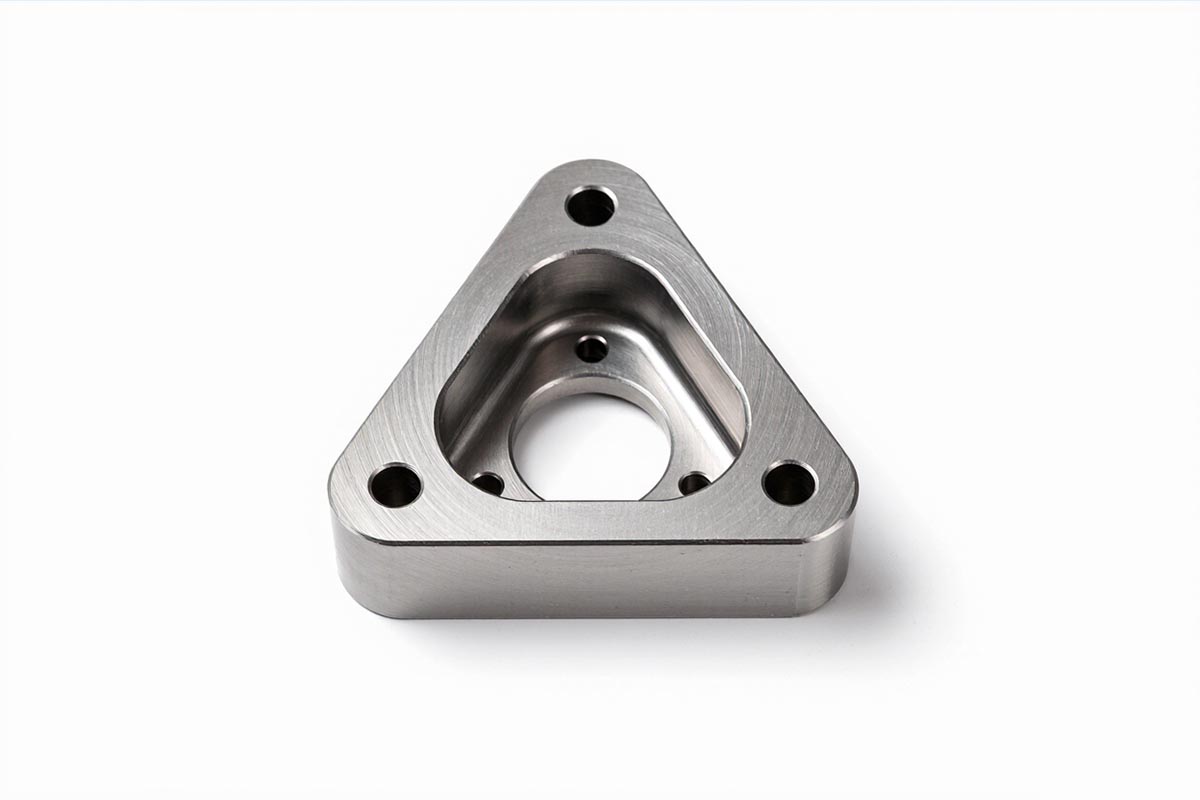
4.3 Thermal Conductivity
The thermal conductivity of 304 stainless steel is approximately 15 W/(m·K) at room temperature.
This is relatively low compared with many carbon steels, aluminum alloys and copper alloys.
For CNC machining, this characteristic is especially important because cutting heat tends to concentrate around the cutting edge and tool-workpiece interface instead of being transferred quickly through the workpiece.
Potential consequences include:
Appropriate cutting tools, coolant delivery and machining strategies are essential.
4.4 Thermal Expansion
304 stainless steel has a relatively high coefficient of thermal expansion compared with many other structural metals.
Its representative thermal expansion coefficient is approximately 16.0 × 10⁻⁶/K between 20°C and 100°C.
This means that a precision-machined component may experience measurable dimensional changes when its temperature rises.
For precision components, manufacturers should consider:
Machining temperature.
Workpiece temperature stabilization.
Fixture restraint.
Tool-generated heat.
Roughing and finishing allowances.
Final inspection temperature.
Thermal expansion is particularly important when manufacturing long components, thin-walled structures and precision assemblies.
4.5 Melting Temperature
The melting range of 304 stainless steel is approximately 1,400–1,450°C.
This high melting range, combined with good oxidation resistance, makes it suitable for a variety of industrial applications involving elevated temperatures.
However, its ability to withstand oxidation at high temperatures does not mean it maintains optimum aqueous corrosion resistance after prolonged exposure to every temperature range.
5. Mechanical Properties of 304 Stainless Steel
The mechanical properties of 304 stainless steel depend on its chemical composition, heat treatment, cold-working history, product dimensions and applicable material standard.
In the annealed condition, it combines relatively moderate yield strength with high ductility and good tensile strength.
5.1 Typical Mechanical Properties
The following values are useful reference points for material selection.
Mechanical Property | Typical or Specification Reference | Unit |
|---|
Minimum Tensile Strength | 515 | MPa |
Minimum Yield Strength (0.2% Offset) | 205 | MPa |
Minimum Elongation | 40 | % |
Maximum Hardness | 92 HRB | Rockwell B |
Elastic Modulus | Approximately 200 | GPa |
The minimum tensile strength, yield strength, elongation and maximum hardness above are representative ATI ASTM product specification values for covered sheet, strip and plate products.
For comparison, Outokumpu publishes the following values for its EN 1.4301 product forms:
Yield strength: approximately 230 MPa for the referenced coil product form.
Tensile strength: 540–750 MPa.
Elongation: approximately 45%.
These values illustrate why engineers should always identify the standard and product form before using mechanical data in a design.
5.2 Strength and Toughness
304 stainless steel provides a useful balance between strength and toughness.
Its relatively high ductility allows it to withstand deformation without immediately fracturing. This makes it suitable for components that must accommodate forming, vibration, mechanical loading and repeated manufacturing operations.
However, 304 is not a high-strength structural alloy when compared with precipitation-hardening stainless steels or certain alloy steels.
Where exceptionally high strength, wear resistance or hardness is required, alternative materials may be more appropriate.
5.3 Ductility and Formability
One of the greatest advantages of 304 is its excellent ductility.
It can be processed through:
Deep drawing.
Bending.
Stretch forming.
Roll forming.
Stamping.
Press forming.
This is why 304 is widely used in kitchen sinks, cookware, equipment housings and fabricated industrial structures.
5.4 Work Hardening
304 stainless steel exhibits significant work hardening during plastic deformation.
When the material is subjected to cold working or machining, its local hardness and strength can increase.
The consequences include:
Increased cutting forces.
Higher tool wear.
More difficult subsequent machining.
Potential springback during bending.
Changes in dimensional stability.
This behavior is particularly important when machining preformed or cold-drawn material.
5.5 Magnetic Properties
304 stainless steel is generally regarded as non-magnetic in its fully annealed austenitic condition.
However, it is not necessarily completely non-magnetic under all conditions.
Cold working, forming, machining and deformation can induce some martensitic transformation, causing localized magnetic attraction.
Therefore, using a magnet as the only method of identifying 304 stainless steel is unreliable.
Reference: Australian Stainless Steel Development Association, Magnetic Effects of Stainless Steels.
6. Chemical Properties and Corrosion Resistance
The corrosion resistance of 304 stainless steel is one of its most important engineering characteristics.
Its performance is largely dependent on the stability of the chromium-rich passive film that naturally forms on the surface.
6.1 Passive Oxide Film
When 304 stainless steel is exposed to oxygen, chromium reacts with oxygen to form a thin protective oxide layer.
This layer:
Separates the underlying metal from the environment.
Slows down further oxidation.
Helps prevent general corrosion.
Can reform naturally when the surface is exposed to suitable oxygen-containing conditions.
However, a passive film does not make stainless steel immune to every corrosive chemical.
Its performance depends on the environmental conditions, including temperature, chloride concentration, pH, surface condition and oxygen availability.
6.2 Atmospheric Corrosion Resistance
304 generally provides excellent resistance to ordinary atmospheric corrosion in indoor and many outdoor environments.
Typical suitable applications include:
Indoor industrial equipment.
Food processing machinery.
Kitchen equipment.
Building cladding.
Handrails.
Architectural components.
General-purpose industrial enclosures.
However, coastal atmospheres with high salt deposition can cause staining and localized corrosion, particularly when surfaces are not regularly cleaned.
6.3 Resistance to Water and Moisture
304 performs well in many ordinary water-related applications.
It is commonly used in:
Water storage tanks.
Food processing equipment.
Commercial kitchen equipment.
General plumbing components.
Water-handling machinery.
Its suitability depends on the water chemistry, particularly chloride content, temperature and the possibility of stagnant conditions.
It should not be assumed suitable for every water treatment or marine application.
6.4 Chloride-Induced Pitting Corrosion
One of the major limitations of 304 stainless steel is its susceptibility to chloride-induced pitting corrosion.
Chloride ions can locally damage the passive oxide film, creating small but potentially deep corrosion pits.
Common sources of chlorides include:
Seawater.
Salt solutions.
Swimming pool chemicals.
Bleach and hypochlorite cleaners.
Certain industrial process fluids.
Salt-contaminated environments.
When chloride exposure is significant, 316 or higher-alloy stainless steels may offer better resistance.
6.5 Crevice Corrosion
Crevice corrosion may develop in confined areas where oxygen availability is limited and corrosive substances accumulate.
Common locations include:
Under washers.
Around bolted connections.
Inside poorly designed joints.
Beneath deposits.
Around incomplete welds.
Between overlapping metal components.
Good product design, adequate drainage, full-penetration welding and regular cleaning can reduce the risk.
6.6 Stress Corrosion Cracking
304 can experience chloride stress corrosion cracking when three conditions occur together:
A susceptible material.
Tensile stress, including residual manufacturing stress.
A suitable corrosive environment, particularly chloride-containing environments at elevated temperatures.
This risk should be carefully evaluated in chemical processing, marine equipment and heated chloride-containing systems.
6.7 Chemical Resistance
304 stainless steel offers resistance to many common organic chemicals, food products and a wide variety of inorganic chemicals.
Nevertheless, its chemical compatibility must be evaluated for the actual chemical concentration, temperature, exposure time and operating conditions.
It should not be considered universally resistant to:
Strong hydrochloric acid.
Concentrated chloride solutions.
Certain aggressive sulfuric acid environments.
Strong oxidizing or reducing chemicals under unsuitable conditions.
Hot concentrated chemical solutions.
For aggressive chemical services, corrosion testing or consultation with a qualified corrosion engineer is recommended.
7. Color and Surface Appearance of 304 Stainless Steel
The natural color of 304 stainless steel is metallic silver or silver-gray.
Its appearance is influenced by manufacturing methods, surface roughness, polishing direction and surface treatment.
Unlike painted materials, the natural color of 304 comes from the metal itself and its surface reflection characteristics.
7.1 Common Surface Finishes
Surface Finish | Appearance | Typical Applications |
|---|
2B | Smooth, moderately reflective | General industrial components |
BA | Bright, reflective surface | Decorative and precision components |
No. 4 | Brushed or satin appearance | Kitchen equipment and architectural panels |
No. 8 | Highly polished mirror surface | Decorative and high-reflectivity applications |
2D | Matte, non-reflective surface | Industrial sheet fabrication |
Bead Blasted | Uniform matte texture | Equipment housings and decorative parts |
Electropolished | Smooth, bright, refined surface | Medical, pharmaceutical and hygienic equipment |
7.2 Can 304 Stainless Steel Be Colored?
Yes.
Although untreated 304 stainless steel has a naturally silver-gray appearance, different surface treatments can produce additional colors and visual effects.
Common methods include:
PVD coating.
Chemical coloring.
Electrochemical coloring.
Decorative surface coating.
Patterned mechanical finishing.
Typical decorative colors include black, gold, bronze, blue and rainbow finishes.
These colors are produced by surface treatments or coatings rather than by changing the natural metallic composition of the material.
8. Common Manufacturing and Processing Methods
304 stainless steel supports a wide range of manufacturing operations, making it suitable for both fabricated structures and precision-machined components.
CNC milling is widely used to manufacture 304 stainless steel components with complex geometries, slots, pockets, holes and precision surfaces.
Typical applications include:
Equipment mounting plates.
Industrial machine components.
Valve bodies.
Mechanical housings.
Medical equipment components.
Automation equipment parts.
Machining challenges include work hardening, cutting heat, high cutting forces and difficult chip evacuation.
CNC turning is suitable for producing cylindrical components from 304 stainless steel bars.
Typical parts include:
Shafts.
Bushings.
Sleeves.
Threaded components.
Valve components.
Connectors.
Precision pins.
Stable workholding, appropriate tool geometry, chip breaking and effective coolant delivery are important to maintain surface quality and dimensional accuracy.
8.3 CNC Drilling and Tapping
304 stainless steel can be drilled and tapped to create precision holes and threaded connections.
However, its work-hardening characteristics mean that:
Drills must remain sharp.
Feed must be stable.
Rubbing should be avoided.
Appropriate cutting fluid should be used.
Chip evacuation must be controlled.
Poor drilling practices can lead to excessive tool wear, poor hole quality and broken taps.
8.4 Precision Grinding
Grinding is used when tighter dimensional tolerances, improved surface finish or precise flatness are required.
Typical applications include:
Grinding wheels and abrasive tools should be selected specifically for stainless steel. Excessive heat and contamination from ordinary carbon-steel grinding equipment should be avoided.
8.5 Sheet Metal Fabrication
304 stainless steel has excellent formability and can be processed through several sheet-metal manufacturing techniques.
Common processes include:
Laser cutting.
Waterjet cutting.
Punching.
Stamping.
Bending.
Rolling.
Deep drawing.
Shearing.
Its ductility makes it especially suitable for thin-walled housings, containers, panels and formed industrial structures.
8.6 Welding
304 stainless steel generally offers excellent weldability.
Common welding methods include:
TIG welding.
MIG welding.
Laser welding.
Resistance welding.
Plasma welding.
ER308 is a commonly used filler metal for welding 304 stainless steel. For 304L, ER308L is commonly selected.
After welding, appropriate cleaning and removal of weld heat tint are important for restoring a clean, corrosion-resistant surface.
For welded assemblies operating in corrosive environments, the use of 304L may be preferable because of its lower carbon content.
8.7 Forging and Hot Working
304 can be manufactured through hot forging and other hot-working processes.
These operations require appropriate temperature control, uniform heating and suitable cooling procedures.
Poor hot-working practices may adversely affect the material's microstructure, mechanical performance and corrosion resistance.
Common finishing processes include:
Mechanical polishing.
Brushing.
Buffing.
Pickling.
Passivation.
Electropolishing.
Bead blasting.
PVD coating.
Passivation and pickling serve different purposes. Pickling removes scale and heat-related surface contamination, while passivation helps establish or improve the protective passive surface condition.
Surface cleanliness is particularly important for components used in food, medical and chemical processing environments.
9. CNC Machining Characteristics of 304 Stainless Steel
Although 304 stainless steel is highly versatile, its machinability is generally lower than that of many conventional carbon steels and free-machining stainless grades.
Manufacturers must account for its material behavior throughout the cutting process.
9.1 Why Is 304 Stainless Steel Difficult to Machine?
There are five major reasons.
1. High Work-Hardening Rate
304 can become significantly harder when subjected to machining deformation.
When a cutting tool rubs against the workpiece instead of cutting effectively, a hardened surface layer may develop.
Subsequent tool contact with this hardened region can increase cutting forces and accelerate tool wear.
2. Low Thermal Conductivity
The relatively low thermal conductivity of 304 means cutting heat tends to concentrate near the tool-workpiece interface.
This can cause:
High cutting-edge temperatures.
Faster tool deterioration.
Poor dimensional consistency.
Thermal damage to the machined surface.
3. High Ductility
304 tends to produce long, continuous chips.
These chips may wrap around tools, damage finished surfaces, interfere with automation and create safety risks.
4. Relatively High Cutting Forces
Its toughness and work-hardening behavior can result in substantial cutting forces, particularly when machining thick sections or performing heavy roughing operations.
5. Thermal Expansion and Dimensional Instability
Heat accumulation can lead to workpiece expansion during machining.
This is important when manufacturing precision components requiring tight tolerances.
9.2 Recommended CNC Machining Strategies
Machining Challenge | Recommended Manufacturing Strategy |
|---|
Work hardening | Maintain continuous cutting engagement and avoid unnecessary tool dwell |
Tool wear | Use sharp, suitable carbide cutting tools |
Long chips | Select effective chip-breaker geometry |
Cutting heat | Use appropriate coolant delivery and stable cutting conditions |
Vibration | Use rigid machines, fixtures and toolholders |
Dimensional deviation | Control workpiece temperature and machining allowances |
Surface damage | Avoid rubbing and use controlled finishing passes |
Tool breakage | Optimize feed, cutting depth and tool engagement |
9.3 CNC Milling Recommendations
When milling 304 stainless steel:
Use a rigid machining setup.
Select tooling specifically suitable for austenitic stainless steel.
Maintain sufficient feed to achieve effective cutting rather than rubbing.
Avoid dwelling at the cutting surface.
Use appropriate coolant delivery.
Control tool engagement to prevent excessive cutting forces.
Manage chip evacuation carefully.
9.4 CNC Turning Recommendations
For turning 304 stainless steel:
Use rigid toolholders and stable workholding.
Select inserts with suitable geometry and chip breakers.
Maintain cutting conditions that avoid rubbing and excessive work hardening.
Control continuous chips.
Monitor cutting-edge wear.
Use effective coolant where appropriate.
9.5 Precision Machining Considerations
For components requiring tight tolerances, the entire manufacturing process must be considered rather than relying solely on the final finishing operation.
A well-controlled process may include:
Material verification and incoming inspection.
Stock preparation and workpiece stabilization.
Rough machining.
Controlled intermediate inspection.
Semi-finishing.
Finishing machining.
Deburring and surface treatment.
Final dimensional inspection.
For complex or thin-walled parts, balanced material removal and properly designed fixtures can help reduce deformation.
Important: There is no single cutting speed or feed rate suitable for every 304 machining operation. Appropriate parameters depend on the material condition, cutting tool, machine rigidity, tool engagement, workpiece geometry and coolant strategy.
9.6 Is 304 Stainless Steel Suitable for Precision CNC Machining?
Yes.
304 is suitable for precision CNC milling, turning, drilling, boring, tapping and grinding.
However, achieving stable dimensional accuracy requires appropriate tooling, workholding, thermal management and process control.
For complex parts, engineering review should consider material condition, machining sequence, wall thickness, dimensional tolerances and final surface requirements before production begins.
10. Industries and Applications of 304 Stainless Steel
The versatility of 304 stainless steel makes it suitable for a wide variety of industrial applications.
10.1 Food and Beverage Industry
304 is commonly used in food-related equipment because it offers good corrosion resistance, cleanability and fabrication properties.
Typical products include:
Food processing equipment.
Mixing tanks.
Commercial kitchen equipment.
Food storage containers.
Brewery equipment.
Dairy processing machinery.
Sinks and countertops.
Food transportation components.
For food-contact applications, material selection alone is not sufficient. Surface finish, weld design, drainage, cleaning procedures and applicable regulatory requirements must also be considered.
10.2 Medical and Pharmaceutical Industry
304 stainless steel is used in various non-implantable medical and pharmaceutical equipment applications.
Examples include:
Where sterilization, aggressive cleaning chemicals or particularly demanding corrosion requirements are involved, the actual application should be evaluated carefully. Alternative grades may be preferable.
10.3 Automotive Industry
304 stainless steel is used for components requiring corrosion resistance, strength and an attractive metallic finish.
Examples include:
10.4 Aerospace and Aviation
304 can be used in selected aerospace support equipment, ground equipment, brackets and general industrial components.
However, it is not automatically a preferred material for flight-critical aerospace structures. Applications requiring a high strength-to-weight ratio, specialized fatigue performance or strict aerospace qualification may require titanium alloys, aluminum alloys or other engineered materials.
10.5 Industrial Automation and Robotics
304 is suitable for many industrial automation components where corrosion resistance, dimensional stability and mechanical durability are important.
Applications include:
Equipment mounting brackets.
Machine covers.
Protective housings.
Sensor mounting components.
Mechanical supports.
Fluid handling components.
Selected robot accessories and fixtures.
For highly loaded robot arms or weight-sensitive moving structures, aluminum, titanium or high-strength alloy steels may provide a better overall design solution.
10.6 Chemical and Industrial Processing
304 is commonly used in chemical processing environments where the operating media are compatible with its corrosion resistance.
Typical components include:
Storage tanks.
Processing equipment.
Industrial pipes.
Valves.
Flanges.
Pumps.
Mechanical fittings.
For aggressive chemical solutions or elevated chloride concentrations, 316, duplex stainless steels or specialized corrosion-resistant alloys should be considered.
10.7 Architecture and Construction
Common applications include:
The surface finish and environmental exposure should be considered when selecting the appropriate stainless steel grade.
10.8 Marine and Offshore Equipment
304 may be suitable for selected indoor or protected marine-related applications, but it should not generally be selected for prolonged seawater exposure.
For marine equipment, 316L, duplex stainless steel or higher-alloy grades may provide better performance depending on the environment.
11. Advantages and Disadvantages of 304 Stainless Steel
Advantages
Excellent General Corrosion Resistance
Its chromium-rich passive layer provides reliable corrosion resistance in numerous everyday and industrial environments.
Good Mechanical Strength
304 provides a useful balance of tensile strength, toughness and ductility.
Excellent Formability
It can be deep drawn, bent, rolled and stamped into complex shapes.
Good Weldability
Most common stainless steel welding techniques can be used successfully.
Wide Availability
It is available in sheet, plate, bar, rod, pipe, tube, strip, fittings and other product forms.
Versatile Surface Finishing
It can be brushed, polished, passivated, electropolished and coated.
Good Low-Temperature Performance
Its austenitic structure provides excellent toughness at low temperatures.
Disadvantages
Limited Resistance to Chlorides
It is susceptible to pitting and crevice corrosion in chloride-containing environments.
Difficult Machinability
Its work-hardening behavior and long-chip formation can increase machining complexity.
Relatively High Thermal Expansion
Dimensional changes from heating should be considered in precision engineering.
Not Heat-Treatable for Hardening
It cannot be hardened through conventional quenching and tempering.
Higher Material Cost Than Many Carbon Steels
The nickel and chromium content generally makes it more expensive than ordinary carbon steel.
Not Suitable for Every High-Strength Application
Specialized stainless steels and alloy steels may be more appropriate where very high strength or hardness is required.
12. Heat Treatment of 304 Stainless Steel
304 stainless steel cannot be hardened through conventional quenching and tempering.
However, solution annealing can be used to restore the material's austenitic structure and improve corrosion-related performance after appropriate processing.
12.1 Solution Annealing
A typical solution annealing temperature range is approximately 1,010–1,120°C, followed by rapid cooling.
The exact conditions must follow the applicable material specification and manufacturing procedure.
Solution annealing can:
Dissolve certain chromium carbides.
Reduce the effects of previous cold working.
Restore ductility.
Help restore corrosion resistance.
Improve metallurgical uniformity.
12.2 Can 304 Stainless Steel Be Hardened?
Not through conventional heat treatment.
However, it can increase in strength and hardness through cold working and plastic deformation.
Examples include:
Cold rolling.
Drawing.
Forming.
Bending.
Mechanical deformation.
This behavior is fundamentally different from the hardening mechanism of martensitic stainless steels.
12.3 High-Temperature Performance
304 provides good oxidation resistance at elevated temperatures.
Representative oxidation service references include:
These are oxidation-resistance reference values rather than guaranteed operating temperature limits for every component.
Continuous exposure in the approximate 425–860°C range requires special consideration because carbide precipitation can affect subsequent aqueous corrosion resistance. For appropriate welded or elevated-temperature applications, 304L or 304H may be more suitable depending on the design requirements.
13. Comparison of 304 with Other Stainless Steel Grades
Material selection should consider corrosion resistance, mechanical properties, manufacturing requirements, cost and actual operating conditions.
13.1 304 vs 304L Stainless Steel
Property | 304 | 304L |
|---|
Material Number | 1.4301 | 1.4307 |
UNS | S30400 | S30403 |
Carbon Content | Higher permitted carbon limit | ≤0.03% |
Corrosion Resistance | Good | Improved resistance to weld sensitization |
Weldability | Excellent | Excellent |
General Machinability | Challenging | Similar challenges |
Main Applications | General industrial equipment | Welded structures and fabricated assemblies |
Which Is Better?
304L is generally preferred when welding is extensive or when the risk of intergranular corrosion after welding is important.
304 is suitable for many general-purpose applications where its standard carbon content is acceptable.
13.2 304 vs 316 Stainless Steel
Property | 304 | 316 |
|---|
Main Alloying Elements | Chromium and nickel | Chromium, nickel and molybdenum |
Typical Chromium | Approximately 18% | Approximately 16–18% |
Typical Nickel | Approximately 8–10.5% | Approximately 10–14% |
Molybdenum | No intentional addition | Approximately 2–3% |
General Corrosion Resistance | Good | Generally better |
Chloride Pitting Resistance | Lower | Higher |
Typical Cost | Lower | Higher |
Which Is Better?
304 is suitable for general-purpose industrial applications and many food-processing environments.
316 is generally preferred when improved resistance to chloride-induced pitting and crevice corrosion is required.
However, 316 should not automatically be considered suitable for unrestricted seawater exposure.
13.3 304 vs 303 Stainless Steel
Property | 304 | 303 |
|---|
Corrosion Resistance | Generally better | Generally lower |
Machinability | More difficult | Improved |
Sulfur Content | Controlled low sulfur | Higher sulfur addition |
Weldability | Good | Generally poor |
Typical Applications | General industrial parts | High-volume machined components |
303 is a free-machining stainless steel developed to improve machining productivity.
It may be preferable for screw-machine components and high-volume turned parts where machinability is more important than the higher corrosion resistance and weldability of 304.
13.4 304 vs 430 Stainless Steel
Property | 304 | 430 |
|---|
Stainless Steel Family | Austenitic | Ferritic |
Nickel Content | Approximately 8–10.5% | Normally no intentional nickel addition |
Magnetic Properties | Generally non-magnetic when annealed | Magnetic |
Corrosion Resistance | Generally higher | Moderate |
Formability | Excellent | Good |
Main Applications | Food equipment, machinery and general industrial parts | Appliances, decorative panels and indoor equipment |
304 is usually preferable when stronger corrosion resistance and better forming performance are required.
430 can be an economical choice for less demanding environments.
14. Common Product Forms of 304 Stainless Steel
304 stainless steel is manufactured and supplied in many industrial product forms.
Product Form | Typical Application |
|---|
Stainless Steel Sheet | Housings, panels and fabricated structures |
Stainless Steel Plate | Machinery bases, tanks and structural components |
Stainless Steel Round Bar | CNC turning and precision machined parts |
Stainless Steel Flat Bar | Brackets and mechanical supports |
Stainless Steel Pipe | Fluid handling and process systems |
Stainless Steel Tube | Structural, architectural and mechanical assemblies |
Stainless Steel Rod | Fasteners, shafts and precision components |
Stainless Steel Strip | Springs, formed components and stamped parts |
Stainless Steel Wire | Fasteners and wire-formed components |
For CNC machining, round bar, plate and flat bar are especially common starting materials.
Material selection should consider stock dimensions, delivery condition, tolerance requirements, machining allowances and material certification.
15. How to Select the Right 304 Stainless Steel for CNC Manufacturing
Selecting the correct 304 stainless steel material involves more than simply specifying a grade.
Engineers and procurement teams should consider the following factors.
1. Material Standard
Clearly specify ASTM, EN, GB or JIS requirements.
2. Material Condition
Annealed, cold-worked and cold-drawn products can have different mechanical characteristics and machining behavior.
3. Product Dimensions
The selected bar, plate or sheet must provide sufficient machining allowance.
4. Corrosion Environment
Evaluate exposure to water, salt, chemicals, humidity and elevated temperatures.
5. Mechanical Requirements
Check tensile strength, yield strength, hardness and elongation against design requirements.
6. Machining Requirements
Consider component complexity, wall thickness, hole geometry, tolerances, surface finish and production quantities.
7. Surface Treatment
Determine whether the component requires polishing, passivation, electropolishing, brushing or another finish.
8. Quality Documentation
For critical industrial components, request material certificates and appropriate inspection records.
A well-defined material specification can reduce procurement uncertainty, improve production consistency and minimize the risk of material substitution.
16. Frequently Asked Questions About 304 Stainless Steel
Q1. What Is 304 Stainless Steel Made Of?
304 stainless steel is primarily made of iron, chromium and nickel. It typically contains approximately 18–20% chromium and 8–10.5% nickel under commonly referenced ASTM A240 composition limits, with the remaining composition consisting primarily of iron and controlled minor alloying elements.
Q2. Is 304 Stainless Steel the Same as 18/8 Stainless Steel?
Generally, yes. The term 18/8 refers to its approximate chromium and nickel content. However, 18/8 is an informal composition description and should not replace an official material designation or certificate.
Q3. Is 304 Stainless Steel Rust-Proof?
No. Although it offers excellent corrosion resistance in many environments, 304 can still experience corrosion, particularly in chloride-containing environments, marine conditions and certain aggressive chemicals.
Q4. Is 304 Stainless Steel Magnetic?
Annealed 304 is generally non-magnetic. However, cold working and machining deformation can produce some magnetic response.
Q5. Can 304 Stainless Steel Be Machined?
Yes. It can be machined using CNC milling, turning, drilling, tapping, boring and grinding.
However, its high work-hardening rate and relatively low thermal conductivity make it more challenging to machine than many conventional carbon steels.
Q6. Is 304 Stainless Steel Suitable for CNC Milling?
Yes. CNC milling is a common manufacturing method for 304 components.
Rigid machine setups, suitable tooling, stable cutting conditions, coolant management and proper chip evacuation are important for achieving consistent machining quality.
Q7. What Is the Difference Between 304 and 304L?
The principal difference is carbon content. 304L contains no more than 0.03% carbon under its standard chemistry requirements, compared with the higher permitted carbon content of standard 304.
304L generally offers improved resistance to weld-related sensitization.
Q8. Is 304 Stainless Steel Suitable for Marine Applications?
It can be used in some protected marine-related applications, but it is generally not recommended for prolonged seawater exposure. 316L or more corrosion-resistant materials are often preferable.
Q9. Can 304 Stainless Steel Be Heat Treated?
It can undergo solution annealing, but it cannot be hardened through conventional quenching and tempering. Cold working can increase its strength and hardness.
Q10. What Is the Density of 304 Stainless Steel?
Its typical density is approximately 7.90 g/cm³, or 7,900 kg/m³.
Q11. What Is the Melting Point of 304 Stainless Steel?
Its approximate melting range is 1,400–1,450°C.
Q12. What Is the Best Surface Finish for 304 Stainless Steel?
The appropriate finish depends on the application.
2B is widely used for general industrial applications.
No. 4 provides a brushed decorative finish.
No. 8 offers a mirror-like appearance.
Electropolishing can improve surface smoothness for demanding hygienic applications.
Q13. Is 304 Stainless Steel Food Safe?
304 is widely used in food-contact equipment because of its corrosion resistance and cleanability. However, food-contact suitability depends on the applicable regulations, product design, surface finish, contamination control and cleaning procedures.
Q14. Is 304 Stainless Steel Better Than Aluminum?
Neither material is universally better.
304 provides good corrosion resistance, higher density and good durability in many industrial environments. Aluminum is considerably lighter and offers better thermal conductivity, making it preferable for weight-sensitive or heat-transfer applications.
Q15. Is 304 Stainless Steel Suitable for Mass Production?
Yes. It can be manufactured in high quantities using CNC machining, stamping, drawing, laser cutting and welding.
Production efficiency depends on part geometry, material condition, machining strategy, cutting tool selection and the manufacturing process selected.
17. Conclusion: Is 304 Stainless Steel the Right Material?
304 stainless steel remains one of the most versatile materials in modern manufacturing because of its balance of corrosion resistance, strength, ductility, weldability and availability.
It is particularly suitable for:
General industrial machinery.
Food and beverage equipment.
Kitchen and household equipment.
Stainless steel housings.
Chemical processing equipment in compatible environments.
CNC-machined mechanical components.
Architectural and decorative products.
Its principal limitations include chloride-related corrosion risks, significant work hardening, relatively low thermal conductivity and limited suitability for high-strength applications.
For CNC manufacturing, the correct material condition, cutting strategy, tooling, workholding and finishing operations are essential to achieving stable production quality.
The most effective material selection process is to evaluate the actual working environment, mechanical requirements, manufacturing method and expected service life together rather than selecting stainless steel based only on its nominal grade.
Get an Instant Quotefor your custom Stainless steel 304/304L | 1.4301/1.4307 | X5CrNi18-10/X2CrNi18-9/304 stainless steel properties parts today.