Produkcja na żądanie dostawców CNC, stabilna dostawa i spójna jakość.Natychmiastowa cytacja
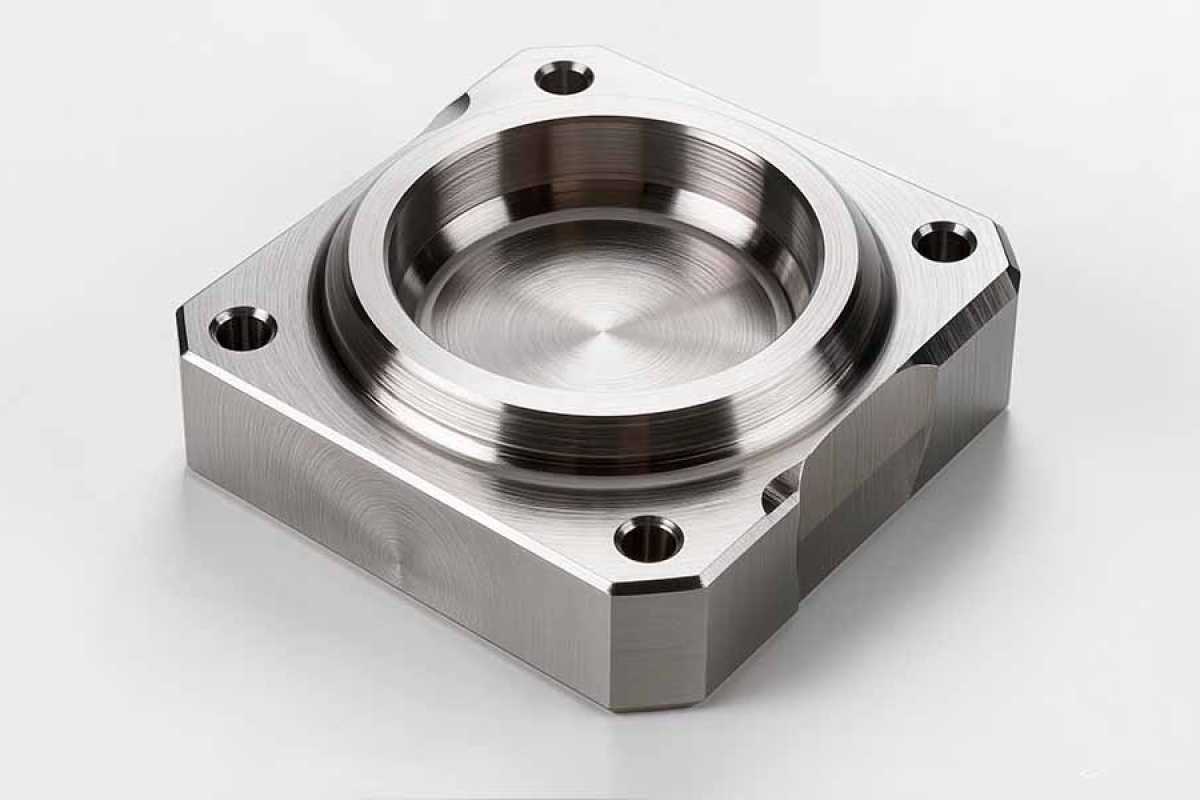
Gotowy na testowanie swojego projektu? Prześlij swoje części do bezpłatnej analizy DFM.
Uzyskaj natychmiastową ofertęRodzaj materiału
Nazwa materiału
Alternatywne nazwy
Kompatybilność procesu
Aluminium 6061-T6jest jednym z najbardziej szeroko stosowanych stopów aluminium do precyzyjnej obróbki CNC. WEvefab6061-T6 jest powszechnie wybierany do zastosowań, które wymagają praktycznej równowagi wytrzymałości, niskiej masy, obróbkowości, odporności na korozję, zdolności wykończenia powierzchni i kosztów produkcji.
Niniejszy przewodnik obejmuje właściwości materiału, charakterystyki obróbki CNC, typowe zastosowania, rozważania produkcyjne, tolerancje, obróbki powierzchniowe i czynniki inżynieryjne, które należy wziąć pod uwagę podczas określania części obróbanych CNC 6061-T6.
Aluminium 6061-T6jest utwardzonym opadem stopem aluminium z serii 6xxx, głównie stopowanym z magnezem i krzemem. Jest szeroko stosowany doprecyzyjna obróbka CNC, komponenty konstrukcyjne, sprzęt przemysłowy, części motoryzacyjne, komponenty lotnicze i systemy automatyki.
WT6 temperamentwskazuje, że stopy zostały poddane obróbce cieplnej w roztworze i sztucznie starzone, aby osiągnąć znacznie wyższy poziom wytrzymałości niż wyżarzony materiał 6061-O.
Przedmiot | Typowe informacje |
|---|---|
Materiał | Aluminium 6061-T6 |
Rodzina stopów | Aluminium serii 6000 |
Główne elementy stopowe | Magnez (Mg), krzem (Si) |
UNS | A96061 |
norma ASTM | ASTM B209, ASTM B211, ASTM B221 i pokrewne normy produktowe |
EN / DIN | EN AW-6061 / AlMg1SiCu |
JIS | A6061 |
ISO | AlMg1SiCu |
Temperacja | T6 |
Rodzaj materiału | Heat-treatable aluminum alloy |
Nazwy powszechne | 6061 aluminum, 6061-T6 aluminum, Al 6061-T6 |
Typical CNC positioning | Excellent general-purpose precision machining alloy |
Important: Equivalent designations do not necessarily mean identical product specifications. Mechanical properties and dimensional requirements should always be verified against the applicable product standard, product form, and temper.
6061-T6 provides a practical balance between:
Strength
Niska waga
Odporność na korozję
Obróbalność
Spawalność
Surface finishing capability
Material availability
Overall manufacturing cost
For many engineered CNC parts, it offers a better cost-to-performance ratio than higher-cost aluminum alloys such as 7075-T6 when maximum strength is not the primary requirement.
The following values are typical engineering values, not guaranteed minimums. Actual properties vary with product form, thickness, manufacturing route, and applicable specification.
Nieruchomość | Typical Value |
|---|---|
Gęstość | 2.70 g/cm³ |
Wytrzymałość na rozciąganie | ~310 MPa |
Siła wydajności | ~276 MPa |
Elongation | ~10–17% |
Elastic modulus | ~68.9 GPa |
Shear modulus | ~26 GPa |
Poisson's ratio | ~0.33 |
Przewodność cieplna | ~167 W/m·K |
Specific heat | ~896 J/kg·K |
Coefficient of thermal expansion | ~23.6 µm/m·K |
Brinell hardness | ~95 HB |
Melting range | ~582–652°C |
With a density of approximately 2.70 g/cm³, 6061-T6 is considerably lighter than steels while providing useful structural strength.
This makes it particularly suitable for:
Lightweight brackets
Machine frames
UAV components
Equipment housings
Chłodniki
Fixtures
Structural plates
The relatively high thermal conductivity of 6061-T6 makes it useful for components that need to transfer heat.
Typical applications include:
Chłodniki
Thermal plates
Electronic equipment housings
Motor components
Power electronics structures
However, its thermal conductivity is not as high as commercially pure aluminum or specialized high-conductivity alloys.
6061-T6 should not be treated as a high-temperature structural alloy. Prolonged exposure to elevated temperatures can reduce the strength associated with the T6 temper.
For components exposed to sustained high temperatures, the actual service temperature, load, and required retained strength should be evaluated rather than relying solely on room-temperature mechanical properties.
6061 aluminum typically contains magnesium and silicon as its principal alloying elements, with copper and other elements present in controlled quantities.
Element | Typical / Specification Range |
|---|---|
Aluminum (Al) | Balance |
Magnesium (Mg) | ~0.8–1.2% |
Silicon (Si) | ~0.4–0.8% |
Copper (Cu) | ~0.15–0.40% |
Iron (Fe) | ≤~0.70% |
Manganese (Mn) | ≤~0.15% |
Chromium (Cr) | ~0.04–0.35% |
Zinc (Zn) | ≤~0.25% |
Titanium (Ti) | ≤~0.15% |
Exact limits depend on the governing material specification and product form.
6061-T6 generally provides good atmospheric corrosion resistance because aluminum naturally forms a thin protective oxide layer.
It performs well in many:
Industrial environments
Outdoor equipment
Marine-adjacent environments
General atmospheric applications
However, corrosion resistance can be affected by:
Chloride exposure
Galvanic coupling with dissimilar metals
Surface damage
Chemical contamination
Harsh acidic or alkaline environments
For demanding environments, surface treatments such as anodizing, hard anodizing, powder coating, or chemical conversion coating can provide additional protection.
6061 is generally considered weldable, particularly using processes such as TIG and MIG welding.
However, welding can locally reduce the strength of the T6 temper in the heat-affected zone. For precision assemblies, this should be considered during design and manufacturing planning.
6061-T6 is also compatible with various mechanical fastening and adhesive-bonding approaches, subject to surface preparation and application requirements.
Yes. 6061-T6 is generally considered an easy-to-machine aluminum alloy.
For a CNC machining supplier such as Evefab, it is one of the most practical materials for:
frezowanie 3-osi
4-axis machining
5-axis machining
Toczenie CNC
Frezowanie obrotowe
Drilling
Threading
Reaming
Tapping
Its combination of relatively low hardness, good chip formation and good thermal conductivity makes it well suited to high-productivity machining.
Difficulty: Easy
Compared with materials such as stainless steel, titanium alloys and nickel-based superalloys, 6061-T6 generally requires significantly less cutting force and causes less severe tool wear.
For production CNC machining, common choices include:
Solid carbide end mills
Carbide drills
Carbide reamers
Polished carbide tools designed for aluminum
PCD tooling for high-volume or high-surface-quality applications
For aluminum machining, tool geometry is important. A sharp cutting edge and suitable flute geometry can help reduce:
Built-up edge
Material adhesion
Burr formation
Poor surface finish
Cutting forces
High-helix tools are often useful for efficient chip evacuation in milling applications.
Actual cutting parameters should be optimized according to:
Machine spindle power
Tool diameter
Tool coating
Number of flutes
Workholding rigidity
Coolant
Depth of cut
Radial engagement
Component geometry
Representative starting ranges for carbide tooling may include:
Parametr | Typical Starting Range |
|---|---|
Milling cutting speed | ~200–600 m/min |
Spindle speed | Tool-diameter dependent |
Feed per tooth | ~0.03–0.15 mm/tooth |
Coolant | Flood coolant / MQL / air depending on application |
Roughing radial engagement | Geometry dependent |
Finishing DOC | Typically reduced for dimensional and surface control |
Engineering note: These values should be treated as engineering starting points rather than universal production settings. A qualified CNC programmer should optimize the actual parameters using the specific machine-tool combination.
6061 aluminum can adhere to the cutting edge when tooling, speed, lubrication or chip evacuation is poorly selected.
Solutions:
Use sharp aluminum-specific carbide tooling.
Increase cutting speed where appropriate.
Improve lubrication.
Use polished flute surfaces.
Avoid excessive tool dwell.
Ensure effective chip evacuation.
Burrs commonly occur around:
Drilled holes
Through-holes
Thin edges
Slot exits
Intersecting machined features
Solutions:
Optimize cutting conditions.
Use sharp tooling.
Apply controlled tool exit strategies.
Add dedicated deburring operations.
Use edge-break requirements in the drawing.
Although 6061-T6 is relatively easy to machine, thin sections can deform because aluminum has a relatively low elastic modulus.
Solutions include:
Optimize workholding pressure.
Use soft jaws or conformal fixtures.
Machine symmetrically.
Leave finishing stock.
Use multiple light finishing passes.
Control heat generation.
Consider stress-relieved material for demanding components.
Poor surface finish may result from:
Tool deflection
Excessive radial engagement
Worn tooling
Improper spindle speed
Poor chip evacuation
Machine vibration
Using sharp tooling, rigid workholding and appropriate finishing strategies can significantly improve the final surface.
For properly designed and controlled CNC machining processes, 6061-T6 can support tight dimensional tolerances.
A general CNC manufacturing capability may be around:
±0.01–0.05 mm
Depending strongly on feature size, geometry, machine capability, inspection method and production process.
For selected critical features, tighter tolerances can be achieved through specialized process planning and secondary operations.
Typical CNC-machined surface roughness can range approximately from:
Ra 0.8–3.2 µm
Depending on the machining strategy, tooling and finishing requirements.
These are manufacturing capability ranges rather than material properties or universal guarantees.
6061-T6 is compatible with:
3-axis machining
4-axis machining
5-axis machining
Toczenie CNC
Frezowanie obrotowe
Drilling
Reaming
Tapping
Thread milling
Boring
Szlifowanie
Wykończenie powierzchni
Anodowanie
6061-T6 is particularly suitable for high-speed CNC machining because of its relatively low cutting forces and good machinability.
This makes it attractive for high-productivity production environments.
6061-T6 can be used for thin-wall CNC components, but fixture design and machining sequence become critical.
A typical strategy is:
Roughing → Semi-finishing → Stress/Thermal Stabilization Where Necessary → Finishing → Inspection
For large thin plates, additional process controls may be necessary to manage residual stress and distortion.
5-axis CNC machining is well suited to 6061-T6 components with:
Angled surfaces
Deep pockets
Compound curves
Multiple datum orientations
Complex structural features
5-axis positioning can also reduce the number of setups, improving geometric consistency between features.
6061-T6 is commonly considered for lightweight structural and non-critical aerospace/UAV components where its strength, machinability and corrosion resistance are appropriate.
Typical components include:
Mounting brackets
Structural supports
Sensor mounts
Equipment housings
Ramki
Fixtures
For flight-critical aerospace components, the required aerospace material specification and certification should be confirmed rather than assuming commercial 6061-T6 is acceptable.
6061-T6 is highly suitable for automation equipment because it combines low weight with adequate structural stiffness for many applications.
Typical CNC parts include:
Robot brackets
End-effector components
Motor mounts
Linear-axis components
Sensor brackets
Gearbox housings
Machine bases
Custom fixtures
Applications can include:
Mounting brackets
Pokładki
Mieszkania
Fixtures
Lightweight structural components
Prototype components
The material is particularly attractive for applications where weight reduction and manufacturability are more important than maximum tensile strength.
6061-T6 is also used for:
Equipment housings
Mounting plates
Vacuum equipment components
Heat-transfer structures
Panele przyrządów
Precision frames
Semiconductor equipment brackets
Its relatively high thermal conductivity and excellent machining characteristics make it useful for equipment structures and thermal-management components.
Common applications include:
Machine brackets
Custom housings
Płyty podstawowe
Fixtures
Przyrządy
Pokładki
Shafts
Złącza
Ramy konstrukcyjne
Low density + good strength + good machinability + corrosion resistance + broad availability + excellent surface finishing options
This combination makes 6061-T6 one of the most versatile materials for custom CNC manufacturing.
For precision CNC manufacturing, successful 6061-T6 production requires more than simply selecting the correct material. At Evefab, the manufacturing process can be planned around material condition, workholding, machining sequence, dimensional inspection and surface treatment.
Evefab can support 6061-T6 CNC parts with:
Material selection assistance
Certyfikaty materiałowe
Material Test Reports (MTR)
Lot traceability
Incoming material verification
Applicable dimensional and material documentation
For regulated applications, documentation requirements can be defined before production.
Evefab's manufacturing approach can support:
Frezowanie CNC
Toczenie CNC
4-axis machining
5-axis machining
Frezowanie obrotowe
Prototype production
Low-volume manufacturing
Medium-volume production
DFM analysis can identify potential issues with:
Thin walls
Deep pockets
Small internal radii
Difficult-to-machine features
Ciężkie tolerancje
Datum structures
Tool access
Surface finishing requirements
Depending on component requirements, inspection can include:
Calipers
Micrometers
Height gauges
Thread gauges
CMM inspection
Surface roughness measurement
Sprawozdania z kontroli wymiarowej
Inspekcja artykułu pierwszego (FAI)
For critical components, inspection planning can be established directly from the engineering drawing and GD&T requirements.
6061-T6 is particularly compatible with a wide range of post-processing options, including:
Clear anodizing
Black anodizing
Hard anodizing
Chemical conversion coating
Powłoka proszkowa
Szczotkowanie
Bead blasting
Polerowanie
Anodizing is especially common for CNC-machined 6061-T6 components because it can improve surface appearance, wear resistance and corrosion protection.
Requirement | 6061-T6 Assessment |
|---|---|
CNC machinability | Doskonałe |
Waga | Niskie |
Strength | Dobrze. |
Odporność na korozję | Dobrze. |
Przewodność cieplna | Dobrze. |
Spawalność | Dobrze. |
Wykończenie powierzchni | Doskonałe |
Obróbka szybka | Doskonałe |
Thin-wall machining | Good with process control |
Complex 5-axis machining | Doskonałe |
Cost efficiency | Doskonałe |
Availability | Very High |
For engineers selecting an aluminum alloy, a simple distinction is useful:
Better overall balance of machinability, corrosion resistance, weldability and cost.
Significantly higher strength, but generally less favorable for welding and often more expensive.
Therefore, 6061-T6 is usually the better general-purpose CNC machining material, while 7075-T6 becomes more attractive when higher mechanical strength is the dominant requirement.
If your project requires 6061-T6 CNC machining, provide the 3D CAD model, 2D engineering drawing, required quantity, tolerances, surface finish and target application.
Evefab can use the available engineering information to evaluate material condition, machining strategy, fixture requirements, tolerances, surface treatment, inspection requirements and production cost before manufacturing.
Contact Evefab for an Aluminum 6061-T6 CNC machining quote and DFM review for your prototype or production project.
Uzyskaj natychmiastową ofertędla niestandardowych części Aluminium 6061-T6 dzisiaj.
Gotowy do przekształcenia pliku CAD w niestandardową część? Prześlij swój projekt, aby uzyskać bezpłatną, precyzyjną ofertę.
Uzyskaj natychmiastową ofertę