







Applications du polypropylène: Utilisations industrielles, sélection des grades et méthodes de fabrication
Publié le lundi 26. octobre 2026
Guide du contenu :Découvrez les principales applications et propriétés techniques du polypropylène. Apprenez à sélectionner la bonne qualité de PP et à choisir entre l'usinage CNC et le moulage. Un guide technique pratique pour les applications en polypropylène. Comparez les grades de PP, examinez la résistance chimique et apprenez à fabriquer du PP personnalisé
Le polypropylène (PP) est un thermoplastique léger utilisé dans les emballages, les systèmes de manipulation de fluides, les véhicules, l'équipement de laboratoire, les produits de consommation, les fibres et les composants industriels. Le bon choix dépend de la qualité de PP spécifique, de l'environnement de service et du processus de fabrication.
Applications PP
Sélection de grade
Méthodes de fabrication
Achats B2B
Réponse rapide
Où est utilisé le polypropylène ?Les applications courantes du polypropylène comprennent l'emballage alimentaire et industriel, les composants intérieurs et sous capot automobile, les réservoirs chimiques, les fournitures de laboratoire, les produits de santé, l'isolation électrique, les systèmes de tuyauterie et les composants de machines usinées sur mesure.
Pourquoi choisir PP ?Il combine faible poids, résistance à de nombreux produits chimiques aqueux, faible absorption d'humidité et de nombreuses options de traitement. Ses limitations comprennent le glissement sous charge soutenue, la raideur dépendante de la température et une faible résistance aux UV sans additifs stabilisants.
Comment les ingénieurs choisissent-ils un processus ?Le moulage par injection convient à des pièces complexes répétables et à grand volume; l'extrusion convient aux profils et feuilles continus; thermoformage convient aux formes à base de feuilles; et le fraisage ou le tournage CNC est idéal pour les prototypes, les pièces à faible volume et les géométries personnalisées.
EnvironnementVérifiez la température de fonctionnement continue, les concentrations chimiques, l'exposition aux UV et les agents de nettoyage.
Conception mécaniqueExaminer la raideur, l'impact à température froide, le glissement sous charge et la stabilité dimensionnelle.
Plan de productionÉquilibrer le volume de commande par rapport au coût d'outillage, aux changements de conception, à la finition, à la tolérance et aux besoins d'inspection.
Qu'est-ce que le polypropylène ?
Propriétés qui façonnent les applications
Principales applications industrielles
Choisir un grade PP
Choisir un processus de fabrication
PP vs autres plastiques
Erreurs de sélection courantes
Liste de contrôle des achats
Questions fréquemment posées
Références et vérification des faits
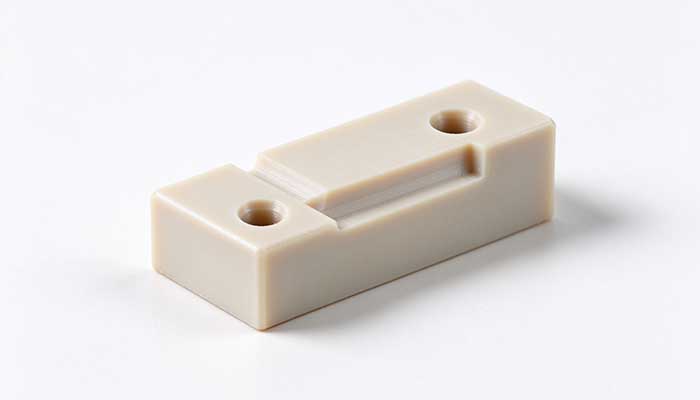
Polypropylène, abrégéPPest une polyoléfine thermoplastique réalisée par polymérisation du propylène. C'est un plastique semi-cristallin disponible en plusieurs formulations pour des produits flexibles et rigides. Son large usage reflète un équilibre utile entre poids, résistance chimique, processabilité et coût.
Le PP n'est pas un matériau interchangeable.homopolymère, copolymère aléatoireetcopolymère d'impactles grades diffèrent en rigidité, performance d'impact à température froide, clarté et comportement de traitement. Les charges, les fibres de verre renforcées, les pigments, les stabilisateurs UV et les emballages retardants de flamme peuvent altérer davantage les performances.
Pour la conception et l ' achat, indiquer la qualité réelle (ou un équivalent approuvé par le fournisseur) plutôt que d ' écrire < < polypropylène > > génériquement sur un dessin. Confirmez la fiche de données de la qualité sélectionnée, le formulaire de stock disponible et toute documentation réglementaire requise pour l’utilisation finale.
Lors du dépistage du PP pour une application, les ingénieurs doivent examiner à la fois ses forces et ses limitations thermiques/mécaniques. Pour référence, alors que les points de fusion du PP varient généralement de 130°C à 171°C selon la formulation,températures de service continu généralement max jusqu'à environ 80°C à 100°Cpour les pièces déchargées.
Comment le comportement du matériau PP affecte les décisions d'ingénierie | |||
Propriété ou comportement | Avantages techniques potentiels | Exemple d'application | Contrôle de limitation ou de conception |
|---|---|---|---|
Résistance chimique | Tolère une gamme d'acides aqueux, d'alcalins, de sels et de fluides de procédé. | Réservoirs, conduits et composants de manutention de produits chimiques. | La compatibilité varie en fonction de la concentration et de la température. Les acides oxydants et certains halogènes peuvent dégrader le PP. |
Faible absorption d'humidité | Limits moisture-driven dimensional changes compared to nylons. | Wet-process fixtures and laboratory items. | Thermal expansion still affects dimensions; low moisture uptake does not guarantee absolute precision. |
Fatigue behavior | Excellent flexural fatigue life in well-designed hinges. | Living hinges, flip-top closures, clips. | Hinge geometry and molecular orientation during injection molding are critical. Does not apply well to CNC-machined hinges. |
Low surface energy | Resists adherence of unwanted substances; easy to clean. | Food bins, guides, covers. | Makes adhesive bonding, printing, and painting very difficult. Requires surface prep (corona, plasma, flame) or welding to join. |
Isolation électrique | High dielectric strength for dry or controlled environments. | Cable components, electrical enclosures. | Confirm the required temperature rating, flame behavior, and relevant electrical standards for the specific grade. |
Creep and thermal expansion | Lightweight parts can be economical if loads are small. | Spacers, covers, supports, brackets. | Long-term stress causes cold flow (creep). Must use generous support, appropriate geometry, and realistic tolerances. |
UV and weathering | Stabilized grades survive defined outdoor exposures. | Agricultural fittings, irrigation components. | Standard, unstabilized PP degrades rapidly (chalking, embrittlement) under UV exposure. |
PP serves both high-volume consumer products and custom industrial parts. These are screening examples; another plastic or metal may be better for high wear, extreme precision, or severe loads.
Typical parts: tanks, fittings, pipe sections, ducts, pump housings, and manifolds. Why PP: Resistance to many aqueous process chemicals without rusting. Processus : extrusion, molding, fabrication (hot gas welding), and CNC machining. Check: exact chemical mixture, temperature, and pressure.
Typical parts: trim, interior panels, ducts, battery cases, and under-hood clips. Why PP: Low mass, vibration dampening, and a broad range of glass-filled/compounded grades. Processus : injection molding. Check: heat aging, impact requirements, and emissions.
Typical parts: trays, containers, sample holders, fixtures, and spacers. Why PP: Low moisture uptake and resistance to laboratory liquids and repeated washing. Processus : molding for high volume; CNC machining for custom geometries. Check: sterilization temperatures (autoclaving may warp some grades).
Typical parts: caps, closures, tubs, trays, and living hinges. Why PP: low weight, moldability, and flexural fatigue resistance. Processus : injection molding, extrusion, and thermoforming. Check: seal design, cold-temperature impact, and food-contact compliance.
Typical parts: selected trays, housings, syringes, and sample containers. Why PP: specialty grades are formulated for defined sterilization needs (e.g., radiation, EtO). Processus : molding and extrusion. Check: biological evaluation, sterilization cycles, and regulatory traceability.
Typical parts: bins, covers, guides, and contact containers. Why PP: easily cleaned, low moisture absorption, and resistance to aggressive food-facility sanitizers. Processus : molding, extrusion, and machining. Check: specific food-contact compliance for the exact grade (e.g., FDA/EU guidelines).
Typical parts: guards, spacers, brackets, blocks, and manifolds. Why PP: Easy to machine from stock materials without dedicated mold tooling. Processus : CNC milling or turning. Check: deflection under load, achieving tight tolerances, and thread pull-out strength.
The grade family gives a starting point, but not a complete specification. Resin suppliers offer individual grades optimized for extrusion, impact, transparency, stiffness, or sterilization.
Typical PP grade-family trade-offs | ||
Grade family | Typical benefits | Crucial limitations |
|---|---|---|
PP homopolymer | High stiffness, high tensile strength, favorable strength-to-weight ratio. Good for rigid parts. | Becomes brittle and susceptible to impact failure near or below 0°C (32°F). |
PP random copolymer | Improved clarity, flexibility, and a different stiffness/impact balance. | Does not achieve glass-like transparency; structural rigidity is lower than homopolymer. |
PP impact (block) copolymer | Contains elastomer components specifically designed to survive cold-temperature impact. | Lower overall stiffness and lower continuous operating temperatures than homopolymer. |
Filled / reinforced PP | Glass fibers or minerals (talc) improve stiffness, dimensional stability, and heat deflection. | Increases weight (density), causes tool wear during CNC machining, and creates anisotropic properties. |
Comparison of common PP manufacturing methods | |||
Processus | Best-fit scenarios | Advantages | Key trade-offs |
|---|---|---|---|
Moulage par injection | High-volume 3D parts with stable geometry (e.g., automotive clips, caps). | Excellent repeatability and low per-part cost at scale; can form living hinges. | High upfront tooling cost; design revisions are expensive after the mold is cut. |
Extrusion | Continuous products like film, pipe, profiles, and sheet stock. | Highly efficient for continuous cross-sections. | Limited strictly to constant-profile geometries. |
Thermoforming | Trays, panels, covers, and large sheet-based shapes. | Lower tooling complexity and cost than large injection molds. | Struggles with wall thinning, deep draws, and requires secondary trimming. |
Fraisage CNC & tournant | Prototypes, low-volume custom parts, manifolds, and thick fixtures. | Zero mold tooling cost; easily accommodates design revisions; fast lead times. | Material removal is slow; PP's compliance makes tight tolerances difficult. |
CNC machining is highly effective for custom chemical-handling blocks, laboratory fixtures, spacers, and custom manifolds made from standard PP plate or rod. However, PP requires specific machining strategies:
Heat sensitivity: PP will melt or smear if cutting speeds and feeds generate too much friction. Sharp, high-positive rake tooling and adequate coolant (or cold air) are necessary.
Elastic recovery: PP is compliant. It can flex away from the cutting tool and "spring back," meaning tightly toleranced holes may end up undersized.
Chip control: PP tends to form long, continuous, stringy chips that can wrap around tooling, requiring programmed chip-breaking routines.
Tolérances : Do not specify extremely tight tolerances (e.g., ±0.001") on a CAD model unless absolutely critical. Discuss achievable limits with your machinist, as PP is subject to thermal expansion and stress relief post-machining.
Compare actual datasheets against your specific load case. No material below is universally superior to PP.
Practical comparison for early material screening | ||
Matériau | Typical strengths vs. PP | Limitations vs. PP |
|---|---|---|
HDPE | Superior low-temperature impact toughness; slightly better resistance to some solvents. | Generally less stiff than PP homopolymer; lower continuous heat resistance. |
ABS | Better dimensional stability, easier to glue/paint, excellent room-temperature impact. | Poor chemical resistance to solvents and organics; lower fatigue resistance. |
POM (Acetal/Delrin) | Much higher stiffness, excellent machinability, extremely low friction and wear. | Higher density (heavier), vulnerable to strong acids, higher raw material cost. |
Nylon (PA) | Incredible mechanical strength, heat resistance, and wear characteristics. | Absorbs moisture, which causes parts to swell and lose dimensional accuracy. |
Common mistake | Why it causes problems | How to avoid it |
|---|---|---|
Assuming all PP resists cold impacts | Homopolymers become brittle near freezing temperatures. | Specify impact block copolymers for sub-zero environments. |
Ignoring operating temperature | Stiffness and load capacity drop significantly as temperatures approach 80°C+. | Record continuous and peak temperatures against the specific grade's heat deflection data. |
Underestimating thermal expansion | PP expands with heat more than metals; long parts may warp or bind. | Design in expansion gaps; use generous tolerances for long spans. |
Using unstabilized PP outdoors | UV rays break down the polymer chains, causing chalking and cracking. | Specify UV-stabilized formulations or carbon-black additives for outdoor use. |
Assuming food/medical compliance | Compliance depends on additives, mold release agents, and factory conditions. | Obtain explicit FDA, USP Class VI, or ISO 10993 documentation for the exact batch. |
Before issuing a purchase order for custom PP components, align engineering, quality, and procurement on the following parameters to avoid receiving non-compliant parts:
Exact material specification: State the exact grade/family (e.g., PP Homopolymer, 30% Glass-Filled PP), required color, and explicitly state if a "proposed equivalent" is allowed.
Chemical and thermal exposure: Document every process fluid, cleaner, concentration percentage, and peak operating temperature the part will face.
Documentation & compliance: For regulated industries, require Material Test Reports (MTRs), traceability records, and applicable food-contact or healthcare compliance certificates at the time of order.
Drawing requirements: Supply revision-controlled drawings identifying functional datums, realistic tolerances for a compliant plastic, surface finishes, and critical inspection points.
Quality plan: Agree on first-article inspection (FAI) requirements, measurement methods (e.g., CMM with low touch-force), and reporting formats.
Manufacturing validation: Ask the supplier to confirm that your tolerances are feasible for CNC-machined PP, or if injection molding is required to achieve the desired feature set.
Purchasing rule:Verbal descriptions such as “standard PP” or “any polypropylene” are insufficient for industrial parts. Always tie the PO to a specific grade and revision-controlled drawing.
Common applications include packaging and closures, reusable containers, automotive trim, pipe and fitting systems, chemical-handling components, fibers, consumer products, and laboratory supplies.
Yes, PP is highly resistant to many aqueous acids, alkalis, and process fluids. However, compatibility depends on the exact chemical mixture, concentration, and temperature. It is not suitable for strong oxidizers or certain halogenated hydrocarbons.
Yes. PP stock can be milled or turned for custom parts, prototypes, and low-volume components. Because it is compliant, generates stringy chips, and expands with heat, careful workholding and sharp tooling are required.
PP homopolymer is stiffer and stronger at room temperature but becomes brittle near 0°C. PP copolymers (random or block) offer better impact resistance, especially in cold environments, and varying degrees of clarity.
Due to its extremely low surface energy, standard adhesives will not stick to PP. To bond it, the surface must be treated (corona, plasma, or flame treatment), a specialized polyolefin primer must be used, or the parts must be thermally welded (e.g., hot gas or ultrasonic welding).
Use current supplier documents and applicable legal texts for material approval. The sources below support the general overview discussed in this article.
ExxonMobil Product Solutions — Polypropylene Technical Data Sheets.
SABIC — Polypropylene (PP) product portfolio.
U.S. Electronic Code of Federal Regulations, 21 CFR § 177.1520 — Olefin polymers. (Food contact regulations).
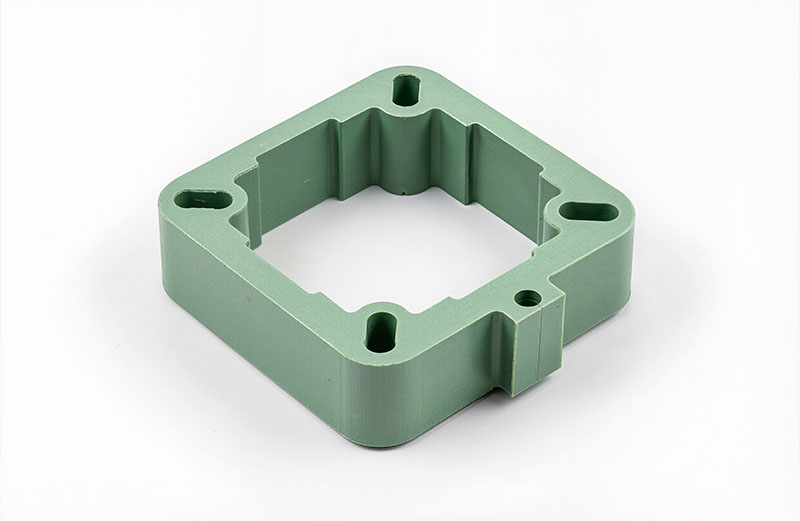
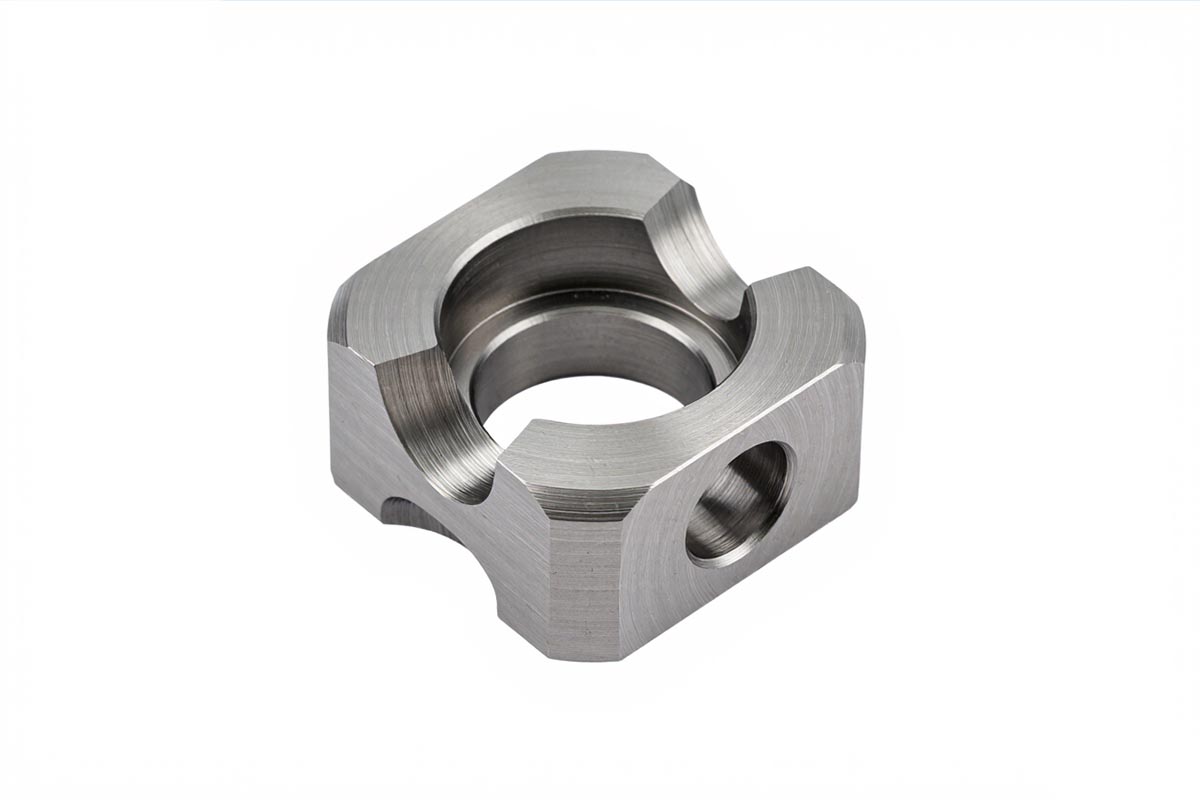
Prêt à transformer votre fichier CAD en pièce personnalisée? Téléchargez votre design pour obtenir un devis gratuit et précis.
Demandez Votre Devis