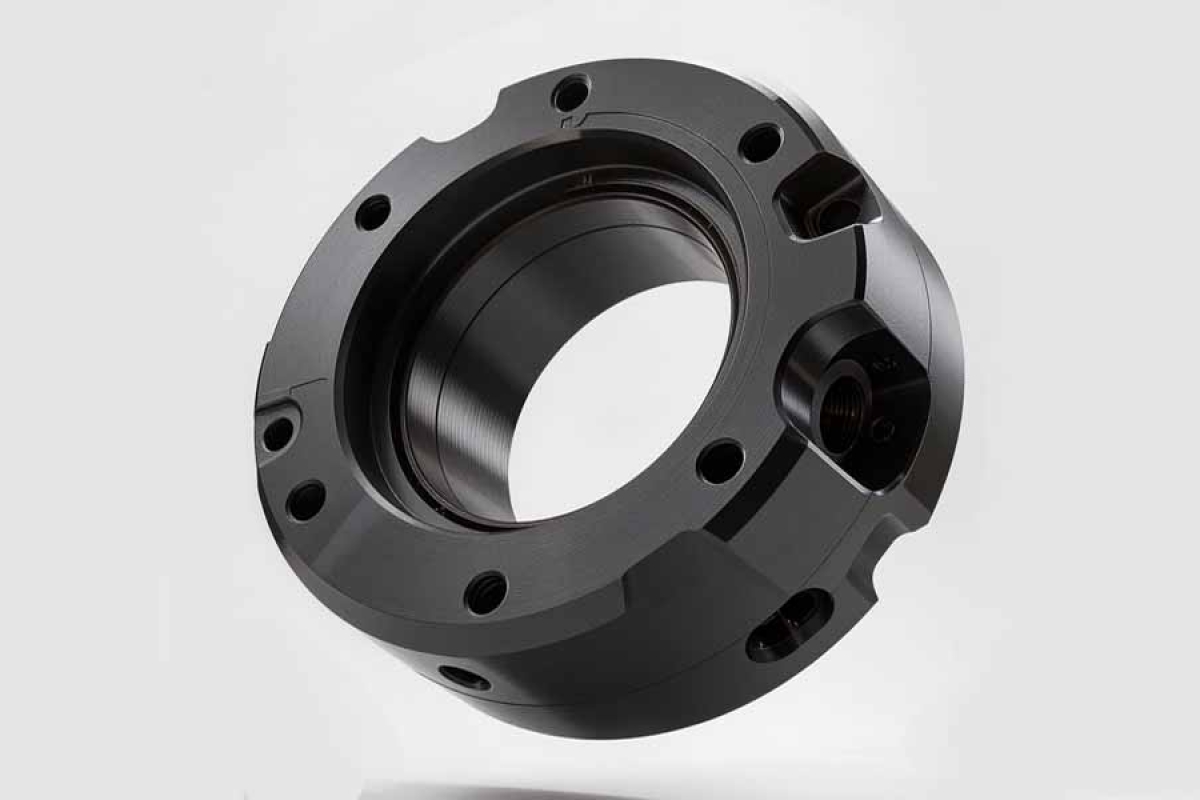
What is PEEK?
PEEK (Polyether Ether Ketone) is a semi-crystalline, high-performance engineering thermoplastic belonging to the polyaryletherketone (PAEK) family. It is widely recognized for its unique combination of.:
1.High mechanical strength
2.Outstanding wear resistance
3.Excellent chemical resistance
4.Superior fatigue resistance
5.Low moisture absorption
6.Excellent dimensional stability
7.Continuous operation at elevated temperatures
Unlike many engineering plastics, PEEK maintains its mechanical properties even under harsh thermal and chemical environments, making it an excellent alternative to certain metals in lightweight applications.
Material Designation
Standard | Designation |
ISO | PEEK |
ASTM | ASTM D6262 (Material Specification) |
ASTM | ASTM D638 (Tensile Testing) |
ASTM | ASTM D695 (Compression Testing) |
ASTM | ASTM D790 (Flexural Testing) |
ASTM | ASTM D256 (Impact Testing) |
ISO | ISO 527 (Mechanical Testing) |
DIN EN | DIN EN ISO 527DIN |
Common Trade Names | Victrex® PEEK, KetaSpire® PEEK, TECAPEEK®, Ketron® PEEKVictrex® PEEK、KetaSpire® PEEK、TECAPEEK®、Ketron® PEEK |
Material Category
· High-performance engineering thermoplastic
· Semi-crystalline polymer
· Engineering plastic
· High-temperature polymer
· Wear-resistant plastic
Precision CNC machining plastic
Market Positioning
PEEK is positioned as a premium engineering plastic for applications requiring
· Metal replacement
· Weight reduction
· High dimensional accuracy
· Sterilization compatibility
· Long service life
· High reliability under demanding operating conditions
Although significantly more expensive than engineering plastics such as POM, Nylon, or UHMW-PE, PEEK provides exceptional value in high-performance applications where reliability and service life are critical.
Key Performance Characteristics
· Excellent fatigue resistance
· Outstanding creep resistance
· Low friction coefficient
· Excellent wear resistance
· Excellent dimensional stability
· High impact resistance compared with many high-performance thermoplastics
· Excellent electrical insulation
· Low outgassing
· Low moisture absorption
Chemical Properties
Typical Chemical Structure
PEEK is an aromatic, semi-crystalline thermoplastic polymer consisting of repeating ether and ketone functional groups. As a polymer, it is not defined by elemental composition percentages like metallic alloys.
Chemical Resistance
PEEK demonstrates excellent resistance to a broad range of industrial chemicals, including:
· Lubricants
· Fuels
· Alcohols
· Aliphatic hydrocarbons
· Aromatic hydrocarbons
· Weak acids
· Strong acids (many, depending on concentration and temperature)
· Weak alkalis
· Strong alkalis (many, depending on exposure conditions)
· Steam and hot water
It is widely selected for aggressive industrial environments because it maintains mechanical integrity under prolonged chemical exposure.
Oxidation Resistance
PEEK offers:
· Excellent oxidation resistance
· Long-term thermal aging stability
Good UV resistance for many industrial applications (though prolonged outdoor exposure may require stabilization depending on the application)
Salt Spray Performance
Unlike metals, PEEK does not corrode in salt spray environments. This makes it suitable for marine equipment, offshore systems, and corrosive industrial applications.
Bonding Compatibility
PEEK has relatively low surface energy, making adhesive bonding more challenging than with many plastics. Surface preparation methods such as plasma treatment, chemical etching, or mechanical abrasion are often used to improve adhesion when bonding is required.
Welding Compatibility
PEEK can be joined using specialized thermoplastic welding techniques, including hot-plate welding, laser welding, and ultrasonic welding, depending on component geometry and application requirements.
CNC Machinability Analysis
Machining Difficulty
Difficulty Rating: Moderate
PEEK machines considerably better than many filled engineering plastics and maintains excellent dimensional stability. However, its relatively low thermal conductivity and high material cost require careful process control to avoid heat buildup and unnecessary waste.
Compatible CNC Processes
PEEK is suitable for
· CNC milling
· CNC turning
· 5-axis machining
· Precision drilling
· Reaming
· Thread milling
· Tapping
· Boring
· Pocket machining
· Thin-wall machining
· Complex contour machining
Micro-machining (with appropriate tooling and process control)
Recommended Tool Materials
Preferred tooling includes:
· Solid carbide end mills
· Polished carbide drills
· Diamond-coated carbide tools (for extended production runs)
· Polycrystalline diamond (PCD) tools for high-volume machining and abrasive filled grades
Sharp cutting edges and highly polished flutes help minimize heat generation and produce superior surface finishes.
Typical Cutting Recommendations
Cutting parameters depend on machine rigidity, tooling, coolant strategy, and part geometry. As a general approach:
· Use sharp tools with positive rake angles.
· Maintain moderate cutting speeds and controlled feed rates to limit heat buildup.
· Employ effective chip evacuation using air blast or suitable coolant where appropriate.
· Avoid excessive dwell times that may soften the workpiece surface.
Process optimization should be validated through trial machining for each specific grade and component geometry.
Common Machining Challenges & Solutions
Challenge | Cause | Recommended Solution |
Heat buildup | Low thermal conductivity | Use sharp tools, optimized feeds, and effective cooling or air blast |
Burr formation | Worn tooling or incorrect cutting parameters | Replace tools promptly and optimize feeds/speeds |
Surface smearing | Excessive cutting temperature | Reduce heat generation and improve chip evacuation |
Dimensional deviation | Internal stress release or thermal expansion | Use stress-relieved stock, rough-then-finish machining, and allow temperature stabilization |
Thin-wall deformation | Inadequate support or excessive cutting forces | Reduce radial engagement, optimize workholding, and use light finishing passes |
Achievable Precision
With proper fixturing, environmental control, and optimized machining parameters, typical capabilities include:
· General tolerances: ±0.05 mm
· Precision features: ±0.01 mm (application dependent)
· Flatness and positional tolerances achievable according to design requirements with appropriate GD&T controls
Actual tolerances depend on part size, geometry, wall thickness, and inspection requirements.
Surface Finish
Typical CNC-machined surface roughness:
· Standard machining: Ra 1.6–3.2 μm
· Fine finishing: Ra 0.8–1.6 μm
Precision finishing with optimized tooling and process control: Ra <0> on suitable geometries
High-Speed Machining Suitability
PEEK supports high-speed machining when heat generation is carefully managed. Stable workholding, sharp tools, and optimized cutting parameters are essential to prevent thermal distortion.
Thin-Wall Machining
PEEK is well suited for thin-wall components because of its strength-to-weight ratio and dimensional stability. Progressive machining strategies and low cutting forces help maintain accuracy.
Complex Geometry Machining
PEEK performs exceptionally well in 3-axis, 4-axis, and 5-axis CNC machining, enabling the production of intricate components with tight tolerances and repeatable quality.
Typical Application Fields & Part Scenarios
Aerospace
PEEK's high strength-to-weight ratio, flame resistance, and thermal stability make it suitable for:
· Lightweight brackets
· Cable clamps
· Electrical insulation components
· Sensor housings
· Structural support parts
Medical Devices
Medical-grade PEEK is widely used because it can withstand repeated sterilization and offers excellent biocompatibility for approved grades.
Typical components include:
· Surgical instrument handles
· Orthopedic instrument parts
· Dental device components
· Medical equipment housings
· Imaging system components
Semiconductor Equipment
PEEK is valued for its low contamination potential and dimensional stability in demanding manufacturing environments.
Applications include:
· Wafer handling components
· Vacuum-compatible fixtures
· Precision guide rails
· Insulating spacers
· Process equipment components
Robotics & Industrial Automation
PEEK helps reduce moving mass while maintaining stiffness and wear resistance.
Typical parts include:
· Robotic end-effector components
· Precision bushings
· Bearing cages
· Wear pads
· Linear guide components
· Sensor mounts
Oil & Gas
PEEK performs reliably in harsh chemical and high-temperature environments.
Typical applications include:
· Valve seats
· Seal backup rings
· Compressor components
· Pump wear parts
· Downhole tool components
Automotive & Electric Vehicles
Common applications include:
· Transmission components
· Sensor housings
· High-temperature connectors
· Lightweight structural parts
· Bearing retainers
Consumer Electronics
PEEK supports demanding applications requiring precision and durability.
Typical parts include:
· Connector insulators
· Precision fixtures
· Test equipment components
· High-performance mechanical assemblies
Why Choose PEEK for These Applications?
PEEK is often selected because it provides:
· Excellent strength-to-weight ratio
· Long service life under cyclic loading
· High wear resistance
· Outstanding chemical resistance
· Continuous operation at elevated temperatures
· Excellent dimensional stability
· Low moisture absorption
· Reliable performance in precision assemblies
These characteristics enable designers to replace heavier metal components in many applications while maintaining mechanical performance and improving corrosion resistance.
Our CNC Machining Advantages
Extensive PEEK Material Availability
We maintain access to a wide range of industrial PEEK stock, including:
· Natural PEEK
· Carbon fiber reinforced PEEK
Our engineering team can recommend the most appropriate grade based on mechanical, thermal, wear, and regulatory requirements.
Proven CNC Machining Expertise
Our machining engineers have extensive experience producing precision PEEK components using optimized tooling, cutting parameters, and fixturing strategies. Established process controls help achieve consistent dimensional accuracy and high production yields for both prototypes and repeat manufacturing
High Precision & Comprehensive Finishing
We manufacture complex PEEK components with tight tolerances and support additional finishing operations such as precision deburring, laser marking, cleaning, and assembly, ensuring parts are ready for end-use or further integration.
Flexible Production Capacity
Whether you need a single prototype, low-volume validation parts, or scalable batch production, our manufacturing workflow supports rapid turnaround while maintaining consistent quality across production volumes.
Quality Assurance & Material Traceability
Quality is verified through a comprehensive inspection process using calibrated measurement equipment. We suppor:
· First Article Inspection (FAI)
· In-process quality control
· Final dimensional inspection
· Material Test Reports (MTR), where applicable from the material supplier
· Inspection reports based on customer specifications
This approach provides confidence in dimensional accuracy, material traceability, and repeatable manufacturing performance.
Request a CNC Machining Quote for PEEK Parts
Looking for a reliable partner to machine custom PEEK components with tight tolerances and consistent quality? Our experienced engineering team provides DFM support, precision CNC machining, and scalable production solutions for aerospace, medical, semiconductor, robotics, and industrial applications.