CNC 공급 업체의 수요에 따라 제조, 안정적인 배달 및 일관된 품질.즉시 인용

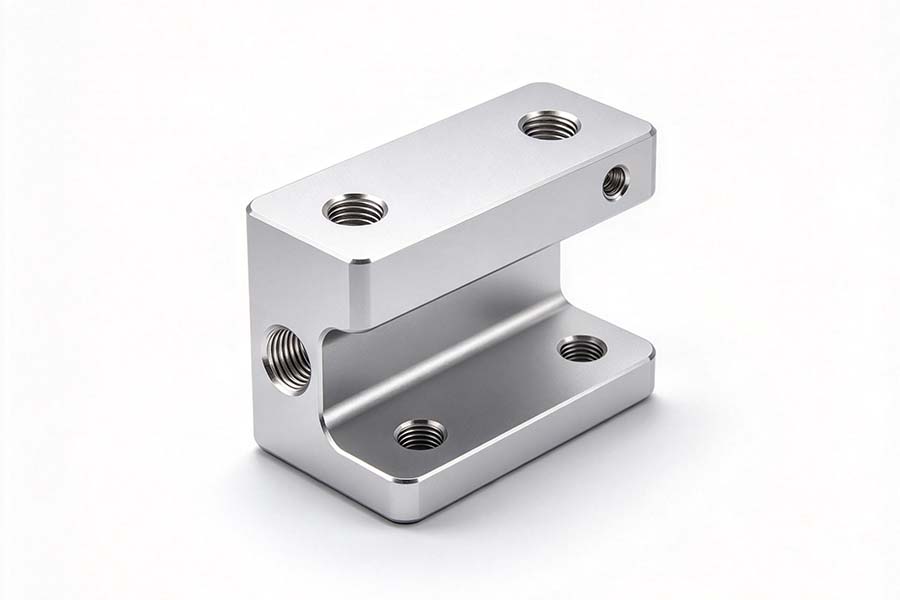
당신의 설계를 테스트할 준비가 되었습니까?무료 DFM 분석을 위해 부품을 업로드합니다.
즉시 견적을 얻으십시오.재료 유형
재료 이름
대체 이름
프로세스 호환성

핵심 SEO 키워드:알루미늄 5083-H111 CNC 가공, 5083 알루미늄 가공, AlMg4.5Mn0.7 CNC 부품, EN AW-5083 가공 부품, 5083-H111 해양 부품, 3.3547 알루미늄 가공, 높은 마그네알륨 알루미늄 CNC
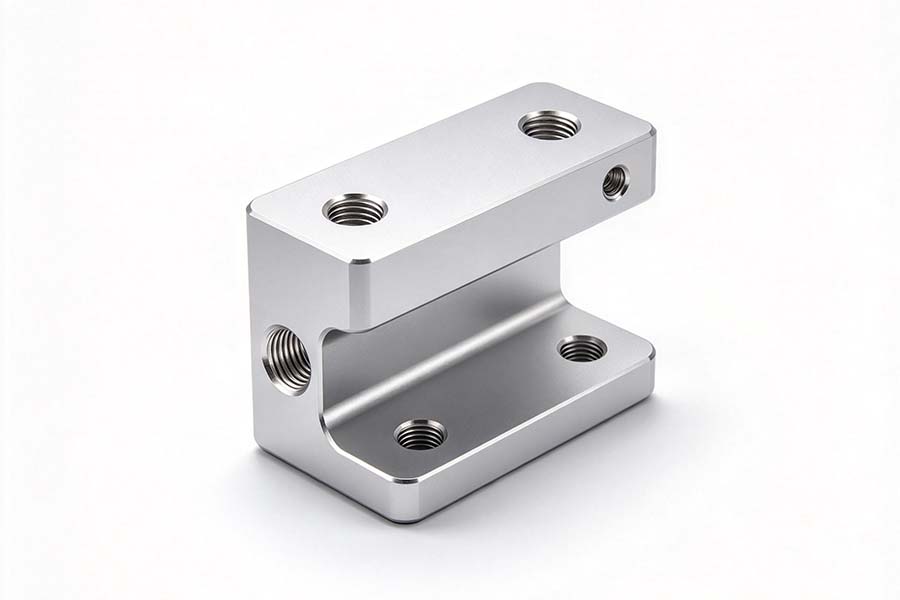
알루미늄 5083-H111 (EN AW-5083/DIN 3.3547/UNS A95083/AlMg4.5Mn0.7)
표준 시스템 | 지명 | 메모 |
|---|---|---|
EN / ISO (주요) | EN AW-5083 (AlMg4.5Mn0.7) | 주요 국제 지명;ISO 기호 AlMg4.5Mn [참조: 0] |
DIN (독일) | 3.3547 | 재료 번호;유럽 조달에서 널리 사용되는 레거시 지명[참조:1] |
UNS (미국) | A95083 | 통합 번호 시스템 지정[참조:2] |
ANSI / AA (미국) | AA5083의 | Aluminum Association registered designation[reference:3] |
JIS (일본) | A5083 | Japanese Industrial Standards designation[reference:4] |
BS (영국, 레거시) | N8 (old) | Legacy British Standard designation; EN AW-5083 is now the reference[reference:5] |
AFNOR (프랑스) | A-G4,5Mn | French standard equivalent[reference:6] |
GM (legacy) | GM41 | Legacy designation occasionally encountered in older drawings[reference:7] |
5083 belongs to the 5xxx series (Al-Mg) non-heat-treatable wrought aluminum alloy family. It is the highest-strength standard alloy in the 5xxx family, containing approximately 4.0–4.9% magnesium, 0.4–1.0% manganese, and 0.05–0.25% chromium[reference:8][reference:9]. Common trade names include:
AlMg4.5Mn0.7 (EN chemical symbol designation)
3.3547 (DIN Werkstoff number)
A95083 (UNS designation)
EN AW-5083 (current EN standard designation)
5083 occupies the “maximum strength, non-heat-treatable, extreme-environment” niche in the aluminum alloy landscape. It is not a competitor to 6061-T6 on machinability or cost, but it outperforms 6061 in seawater corrosion resistance, weldability, and cryogenic toughness—and it achieves these properties without heat treatment, making it the default specification for welded marine structures, pressure vessels, cryogenic tankage, and heavy-duty transportation equipment[reference:10][reference:11]. For B2B procurement, 5083-H111 is specified when the part will be fabricated by welding, exposed to saltwater or chemical environments, or operated at cryogenic temperatures down to –196°C, and CNC machining serves as a secondary operation for fits, interfaces, holes, and precision features[reference:12][reference:13].
부동산 | Typical Value (H111) | Unit | Notes / Source Basis |
|---|---|---|---|
Density | 2.66–2.70 | g/cm³ | EN AW-5083 datasheet; makeitfrom lists 2.7 g/cm³[reference:14][reference:15] |
Tensile Strength (Rm) | 275–350 | MPa | EN 485-2 / mill datasheet; min. 275 MPa[reference:16][reference:17] |
Yield Strength (Rp0.2) | ≥125 (min.) | MPa | EN 485-2; typical values reported at 145–150 MPa[reference:18][reference:19] |
Elongation (A50mm / A5d) | ≥12 / ≥10 | % | EN 485-2 minimum values[reference:20] |
경도 | 75 (typical) | HBW | Brinell hardness; HV ≈ 82–92 reported in literature[reference:21][reference:22] |
Modulus of Elasticity | 68–72 | GPa | makeitfrom lists 68 GPa; EN datasheet lists 72 GPa[reference:23][reference:24] |
열 전도성 | 120–121 | W/m·K | BS EN datasheet; makeitfrom lists 120 W/m·K[reference:25][reference:26] |
열확장계수(coefficient of thermal expansion) | 24–25 × 10⁻⁶ | /K | EN datasheet; makeitfrom lists 24 µm/m-K[reference:27][reference:28] |
Melting Range (Solidus–Liquidus) | ~580–640 | °C | Solidus ~580 °C, liquidus ~640 °C; EN datasheet lists 574–638 °C[reference:29][reference:30] |
Electrical Conductivity | ~29 | % IACS | makeitfrom lists 29% IACS (equal volume)[reference:31] |
Maximum continuous service temperature: 65°C under sustained load. Above this temperature, 5083 becomes susceptible to sensitization (grain-boundary precipitation of β-phase Mg₂Al₃), which degrades corrosion resistance, particularly in marine environments[reference:32][reference:33][reference:34].
Cryogenic service: 걸출했어—5083 retains toughness and strength down to –196°C (liquid nitrogen temperature), making it a standard material for cryogenic tankage and LNG/LH2 containment[reference:35][reference:36].
Wear resistance: 중간. The non-heat-treatable 5xxx matrix does not respond to hardening; for wear-critical interfaces, hard anodizing or insert solutions are required.
Impact resistance: Good to very good, particularly in welded and cryogenic conditions. The high Mg content and strain-hardened H111 temper provide a favorable toughness balance for structural applications[reference:37].
All values are typical industry data based on EN standards, mill datasheets, and peer-reviewed sources. Actual properties vary with product form (sheet, plate, extrusion), thickness, and specific heat chemistry.
Element | Min (%) | Max (%) | Functional Role in 5083 |
|---|---|---|---|
Mg (Magnesium) | 4.00 | 4.90 | Primary solid-solution strengthener; provides strength without heat treatment[reference:38] |
Mn (Manganese) | 0.40 | 1.00 | Grain refinement; enhances strength and corrosion resistance[reference:39] |
Cr (Chromium) | 0.05 | 0.25 | Controls grain structure; improves stress-corrosion resistance[reference:40] |
Fe (Iron) | — | 0.40 | Impurity; higher Fe can form coarse intermetallics that reduce toughness and machinability[reference:41] |
Si (Silicon) | — | 0.40 | Impurity; kept low to avoid Mg₂Si formation (not desired in non-heat-treatable alloys)[reference:42] |
Zn (Zinc) | — | 0.25 | Impurity; can affect corrosion behavior at elevated levels[reference:43] |
Cu (Copper) | — | 0.10 | Strictly limited to preserve weldability and corrosion resistance[reference:44] |
Ti (Titanium) | — | 0.15 | Grain refiner; typical commercial additions ≤0.02%[reference:45] |
Others (each / total) | — | 0.05 / 0.15 | — |
Al (Aluminum) | Remainder (typically ~92.4–95.6%) | Balance[reference:46] | |
Seawater & marine environments: 걸출했어. 5083 is specifically developed for seawater exposure and is the standard alloy for shipbuilding, offshore structures, and marine fuel tanks[reference:47][reference:48].
Industrial chemical environments: Very good resistance to many industrial chemicals, particularly in the H111, H116, and H321 tempers[reference:49][reference:50].
Sensitization risk: Moderate at elevated temperatures. Continuous exposure above 65°C under load can precipitate β-phase Mg₂Al₃ at grain boundaries, reducing corrosion resistance—this is a critical design constraint for 5083[reference:51][reference:52].
Acid & alkali resistance: 중간. The natural Al₂O₃ passive layer provides limited protection in pH extremes; anodizing extends the tolerable range but is less commonly specified on 5083 than on 6xxx alloys due to the alloy’s high Mg content.
Oxidation resistance: 걸출했어 under ambient conditions, forming a stable, self-healing oxide film.
Arc welding (TIG/MIG): 걸출했어—one of the primary reasons 5083 is specified. Recommended filler metals are 5183 (primary), with 5356및5556 as suitable alternatives[reference:53].
Resistance welding: 걸출했어[reference:54].
Gas welding: Average; not the preferred process for this alloy[reference:55].
Brazing / soldering: 불쌍하다—the high Mg content and tenacious oxide film make these processes unreliable[reference:56].
Adhesive bonding: 좋은, provided the surface is properly prepared (mechanical abrasion + chemical etch or conversion coating).
Post-weld strength retention: 5083 retains a substantial portion of its strength after welding—a key advantage over heat-treatable alloys that suffer annealing in the heat-affected zone[reference:57][reference:58].
Rating: MODERATE to DIFFICULT (more challenging than 6061-T6 or 5083 in softer tempers)
5083-H111 presents a distinct machining challenge compared with more common 6xxx alloys. The high magnesium content (4.0–4.9%) and strain-hardened H111 temper produce a gummy, ductile chip that is prone to smearing and built-up edge (BUE). The alloy is also strain-rate sensitive—it work-hardens readily under the cutting edge, which can lead to chatter and poor surface finish if parameters are not optimized[reference:59]. Published assessments range from “불쌍하다” in conservative commercial datasheets to “Mittel” (moderate) in European mill literature[reference:60][reference:61]. In practice, 5083-H111 is machinable with the right tooling and process strategy, but it demands more attention than 6061 or 6082.
응용 프로그램 | Tool Recommendation | Key Geometry / Coating |
|---|---|---|
밀링 | Solid carbide end mills (2–3 flutes for aluminum); PCD-tipped or PCD-coated tools for high-volume production | Sharp, high-positive rake (γ₀ = 15–20°); polished flutes; ZrN or DLC coating to reduce BUE; avoid AlTiN (aluminum adhesion) |
커브 | Carbide inserts with polished, sharp edges; PCD inserts for long-run jobs | High positive rake; chip breaker optimized for ductile aluminum; wiper geometry for finish passes |
Drilling | HSS-Co or solid carbide drills with polished flutes; internal coolant strongly preferred | 135–140° point angle; split point to reduce thrust; parabolic flute for chip evacuation |
Tapping | HSS-E taps with spiral flutes for blind holes; forming taps for through holes | Avoid excessive cutting forces; use lubrication compatible with aluminum |
Operation | Spindle Speed / Cutting Speed | 피드 비율 | Depth of Cut (DOC) | Notes / Source Basis |
|---|---|---|---|---|
End Milling (roughing) | 5,000–7,000 RPM (≈ 150–250 m/min) | 0.055–0.11 mm/tooth | Radial ≤ 0.5 mm; axial per tool | Optimization studies on 5083 report 6,000 rpm and 0.082 mm/tooth as a process optimum[reference:62] |
Pocket Milling | Vc ≈ 150 m/min | fz ≈ 0.025 mm/tooth | ap ≈ 1.0 mm | Reported for 5083-H111 pocket milling[reference:63] |
Drilling | 3,000–4,500 RPM | 150–300 mm/min | Peck cycle recommended for deep holes | Optimal condition reported at 4,500 rpm / 150 mm/min[reference:64] |
Finishing (milling or turning) | Reduce by 20–30% from roughing | Maintain positive feed to avoid rubbing | ≤ 0.3 mm radial | Use wiper geometry or PCD for Ra ≤ 1.6 μm |
Parameters are starting-point references derived from published machining optimization studies on 5083 and 5083-H111. Evefab adjusts based on actual mill certificate values (especially Fe and Mg content), part rigidity, fixturing, and coolant strategy. For high-volume 5083 production, PCD tooling and high-pressure coolant are strongly recommended.
Issue | Root Cause in 5083-H111 | Evefab Solution |
|---|---|---|
Gummy, stringy chips / chip nesting | High Mg content and strain-hardened condition produce ductile, continuous chips that adhere to tooling[reference:65] | Aggressive feed rates; 2–3 flute tools with high helix; high-pressure coolant or air blast; trochoidal paths; chip evacuation planning |
Built-up edge (BUE) and smearing | Aluminum’s affinity for tool materials is amplified by the gummy 5xxx matrix | PCD or ZrN/DLC-coated tools; polished rake faces; high positive rake; avoid AlTiN coatings; adequate lubrication |
Work hardening under the cutting edge | 5083 strain-hardens readily; dwelling or rubbing hardens the surface and accelerates tool wear[reference:66] | Maintain constant feed (never “rub”); climb milling for finishing; sharp tools; avoid excessive spindle speed at low feed |
Chatter and vibration in thin-walled sections | Modulus is only 68–72 GPa; H111 temper is not as stiff as higher-strength tempers | Rigid fixturing with custom soft jaws; light radial engagements; symmetric material removal; support structures for thin walls |
Surface finish inconsistency | Ductile chip adhesion and BUE transfer marks | Finishing passes with sharp PCD or polished carbide; high-pressure coolant; wiper geometry; avoid dwelling |
Corrosion susceptibility after machining | Machining smears or embeds iron/foreign particles, creating galvanic sites | Post-machining cleaning and passivation/desmutting; avoid iron contamination in the shop; dedicated aluminum tooling |
Standard CNC tolerance: ±0.05 mm (typical for 5083 production parts; tighter than this requires careful thermal and fixturing control)
Precision tolerance (critical features): ±0.02 mm achievable with PCD tooling, rigid setups, and in-process inspection
Surface roughness (as-machined): Ra 1.6 μm typical; Ra 0.8 μm achievable with optimized finishing and PCD tooling; Ra 0.4 μm possible with secondary finishing (polishing / lapping)
3/4/5-axis CNC milling — primary process for plate components, weld preparations, and interface features
CNC 선반가공 — shafts, flanges, bushings, and threaded components from 5083 bar stock
CNC drilling / tapping / threading — with attention to chip evacuation and BUE control
CNC boring — for bearing bores, seal interfaces, and precision fits
연磨 — limited applicability; aluminum loading on grinding wheels requires specialized coolant and wheel selection
High-speed machining (HSM): Moderate–Good. 5083 can benefit from HSM strategies (5,000–7,000 RPM in published studies), but the gummy chip and BUE tendency require PCD tooling and high-pressure coolant to realize productivity gains without surface damage[reference:67].
Thin-walled part machining: Challenging. The relatively low modulus (68–72 GPa) and moderate strength of H111 temper make thin-wall stability a primary concern. Custom fixturing, light finishing passes, and possibly stress-relief before final machining are required.
Complex geometry machining: 중간. 5083 is typically supplied as plate and is machined into weld preparations, interface features, and precision pockets rather than being the primary forming process. The value proposition is “weld it, then machine the critical interfaces”—so complex geometry is usually achieved through fabrication rather than monolithic CNC machining[reference:68].
산업 | Typical 5083-H111 Parts | Why 5083-H111 Fits |
|---|---|---|
Shipbuilding & Marine | Hull plates, superstructures, bulkheads, marine fuel tanks, deck fittings, offshore structural nodes[reference:69][reference:70] | Excellent seawater corrosion resistance; retains strength after welding; highest strength among non-heat-treatable Al alloys |
Cryogenic & Pressure Vessels | LNG/LH₂ containment tanks, cryogenic transport vessels, pressure vessel shells, heat exchanger components[reference:71][reference:72] | Toughness and strength retained down to –196°C; weldable; compatible with cryogenic service codes |
Rail & Heavy Transport | Rail car bodies, tank truck bodies, mine skips and cages, container structures, tip truck bodies[reference:73][reference:74] | High strength-to-weight ratio; weldability for large structures; corrosion resistance in exposed service |
Chemical & Food Processing | Chemical tanks, process vessels, piping, food-grade containment, heat exchangers[reference:75][reference:76] | Resistance to industrial chemicals and cleaning agents; weldable; non-toxic and suitable for food-contact applications |
Aerospace & Defense | Cryogenic tankage, armor plate, missile components, lightweight structural panels, containment liners[reference:77][reference:78] | High specific strength; cryogenic toughness; weldability for integrated structures; ballistic performance in armor applications |
Industrial Equipment | Vacuum mold bases, jigs and fixtures, heavy-duty machine frames, hydraulic equipment components[reference:79] | Dimensional stability; corrosion resistance; weldability for fabricated frames; good anodizing response for wear surfaces |
Welded marine hull sections with machined interface features: 5083-H111 plate is cut and welded into the hull or superstructure, then CNC machining is applied to hatch coamings, equipment mounting pads, shaft seal interfaces, and drainage pockets. The welding delivers the primary structure; machining delivers the precision fits[reference:81].
Cryogenic pressure vessel nozzles and manways: 5083-H111 plate is formed and welded into the vessel shell, with CNC-machined nozzle bores, flange faces, and seal grooves added after welding. The alloy’s –196°C toughness makes it suitable for LNG and liquid hydrogen service[reference:82].
Rail car body structural nodes and connection plates: 5083-H111 is machined into gussets, splice plates, and mounting brackets that are subsequently welded into the car body. The machined features ensure fit-up accuracy before welding[reference:83].
Vacuum mold bases and jigs: 5083-H111 plate is CNC-machined into vacuum tables, mold bases, and fixture plates where the combination of good anodizing response, dimensional stability, and weldability (for attaching cooling channels or frame structures) is valued[reference:84].
Armor plate components with machined edges and mounting holes: 5083-H111 is used in defense armor applications, where CNC machining provides the edge preparation, bolt holes, and interface features required for assembly[reference:85].
Evefab maintains qualified stock of EN AW-5083 (3.3547 / AlMg4.5Mn0.7) plate and bar in H111 temper, with thicknesses covering common marine, cryogenic, and transportation applications. For each production lot, we review the mill certificate’s actual Mg, Mn, Cr, and Fe values—not just the compliance range—because these elements directly determine machinability, chip formation, and corrosion performance. If the application involves sustained temperatures above 65°C, we proactively flag the sensitization risk and evaluate alternatives or design mitigations. If higher strength is required without welding, we provide a transparent cross-reference to 5083-H116/H321 or 5383. We help you select the right 5xxx grade and temper before the first chip is cut.
Our process library includes validated parameter sets for 5083-H111 across milling, turning, and drilling operations, derived from published machining optimization studies and our own production history[reference:86][reference:87]. For long-run jobs, we lock parameters against the specific heat’s mill certificate and monitor tool wear in-process to prevent the work-hardening and BUE-related dimensional drift that is common when machining this alloy. Yield rates for 5083-H111 production parts consistently exceed 97% at first-pass inspection on stable, repeat-order programs, with dedicated PCD tooling and high-pressure coolant strategies.
Evefab delivers ±0.05 mm standard machining tolerance및±0.02 mm on critical features for 5083-H111 components using 4-axis and 5-axis CNC platforms. As-machined surface finish reaches Ra 1.6 μm, with Ra 0.8 μm available through optimized finishing paths and PCD tooling. For 5083 parts requiring post-machining protection, we coordinate chromate conversion coating (Alodine), anodizing (Type II/III where applicable), and chemical passivation/desmutting through qualified finishing partners, with first-article verification.
From 1–10 piece prototype runs (typically 5–7 working days for 5083-H111 after drawing release, accounting for the alloy’s machining characteristics) to 50,000+ piece annual volumes, Evefab scales 5083 production across dedicated machining cells configured for aluminum. For welded assemblies, we collaborate with fabrication partners to sequence welding and machining correctly—rough machine → weld → stress relief (if required) → finish machine—reducing distortion and rework.
Every 5083-H111 shipment includes a mill certificate (EN 10204 3.1) traceable to the heat number, with actual chemical composition and mechanical properties. In-process inspection uses CMM, optical comparators, and surface roughness testers; final inspection reports include dimensional data, surface finish values, and visual criteria per your drawing. FAI (First Article Inspection) and PPAP documentation are available for production programs. For marine and cryogenic applications, we can additionally coordinate third-party inspection (DNV, ABS, Lloyd’s, BV) as required.
Contact Evefab for a CNC machining quote and DFM consultation for your Aluminum 5083-H111 (3.3547 / AlMg4.5Mn0.7) project. Upload your CAD files and specify temper (H111/H116/H321), plate thickness, welding requirements, and service temperature—our engineering team will return a manufacturability review and firm quote within 24 hours.
즉시 견적을 받으십시오.오늘 당신의 주문 알루미늄 5083-H111 부속을 위해.