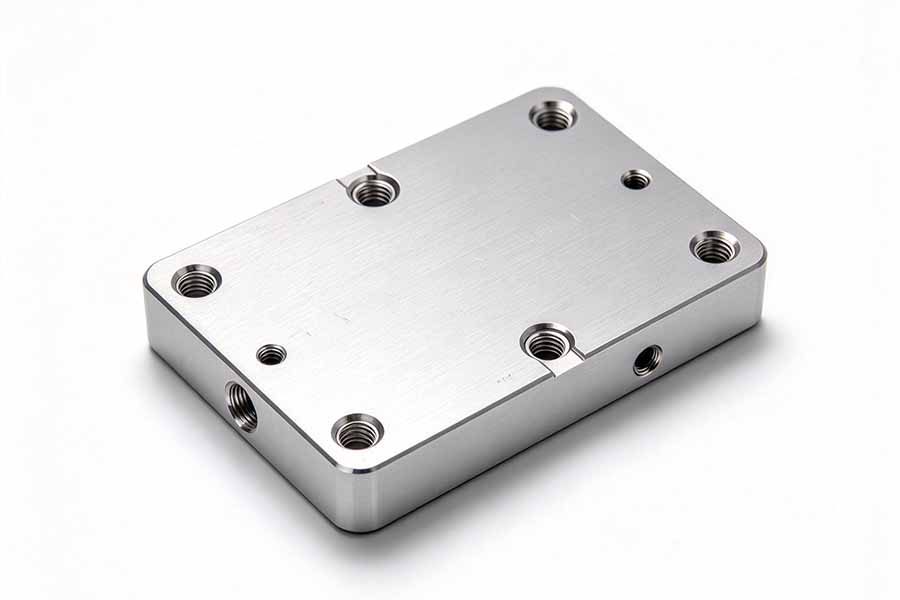
Aluminum 6060 (EN AW-6060 / 3.3206 / AlMgSi0.5) CNC Machining: Material Properties, Machinability & B2B Sourcing Guide
Core SEO Keywords: aluminum 6060 CNC machining, 6060 aluminum machining, AlMgSi CNC parts, 3.3206 aluminum, EN AW-6060 machined components, 6060-T6 machined parts, aluminum extrusion machining
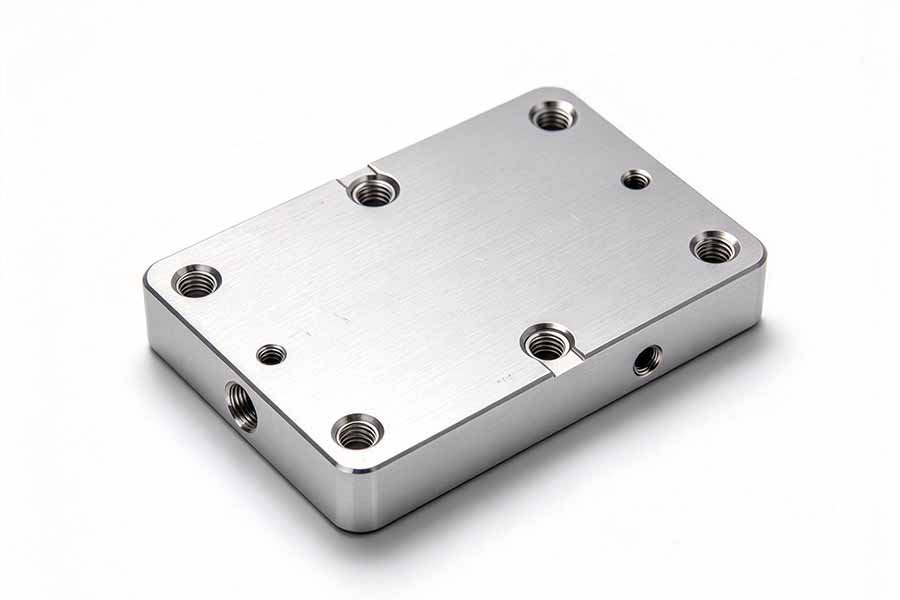
1. Información material básica
Nombre del material
Aluminum 6060 (EN AW-6060 / DIN 3.3206 / AlMgSi0.5)
Designaciones estándar y Grados equivalentes
Sistema estándar | Designación | Notas |
|---|
EN/ISO (primario) | EN AW-6060 (Al MgSi) | Primary international designation |
DIN (Alemania) | 3.3206 (AlMgSi0.5) | Werkstoff number; legacy DIN designation still widely referenced in European procurement |
UNS (Estados Unidos) | A96060 | Unified Numbering System for Metals and Alloys |
ANSI / AA (Estados Unidos) | AA6060 | Designación registrada de la Asociación de Aluminio |
JIS (Japan) | A6060 | Japanese Industrial Standards; registered under AA system |
BS (UK) | H9 (obsolete); current practice follows EN AW-6060 | Legacy designation; EN specification is now the reference |
GB (China) | No direct GB equivalent; supplied against EN specification as “6060” | Chinese mills typically produce to EN AW-6060 chemistry upon request |
Material Category & Common Names
6060 belongs to the 6xxx series (Al-Mg-Si) heat-treatable wrought aluminum alloy family. It is a medium-strength alloy with deliberately leaner alloying content than 6061 or 6082, optimized for extrudability, surface finish quality, and anodizing consistency. Common trade names include:
AlMgSi (EN chemical symbol designation)
AlMgSi0.5 (DIN 3.3206 legacy name, indicating approximately 0.5% Mg and 0.4% Si)
3.3206 (DIN Werkstoff number)
EN AW-6060 (current EN standard designation)
Core Positioning & Market Positioning
6060 occupies the “surface-critical, moderate-strength” niche in the 6xxx family. It is not a direct competitor to 6061-T6 on strength (6060-T6 typically delivers 170–240 MPa tensile vs. 310 MPa for 6061-T6), but it outperforms 6061 in extrusion complexity, anodized appearance uniformity, and weldability. For B2B procurement, 6060 is the default specification when the part starts as an extruded profile—heat sinks, architectural sections, electronic enclosures, structural rails—and the visible surface will be anodized or otherwise appearance-critical.
2. Physical Properties (Typical Values)
Propiedad | Typical Value (T6 Temper unless noted) | Unit | Notes / Source Basis |
|---|
Densidad | 2.70 | g/cm³ | EN AW-6060 datasheet |
Tensile Strength (Rm) | 170–240 (T6); 160 min (T5) | MPa | DIN EN 755-2 / mill datasheet |
Yield Strength (Rp0.2) | 120–170 (T6); 120 min (T5) | MPa | DIN EN 755-2 |
Elongation (A50mm) | 6–10 (T6); 6 min (T5) | % | EN 755-2 |
Dureza | 60–80 (T5/T6, typical) | HBW | Mill datasheet |
Módulo de elasticidad | 69.5 | GPa | BS EN 573-3 datasheet |
Conductividad térmica | 209 | W/m·K | BS EN datasheet |
Coeficiente de expansión térmica | 23.4 × 10⁻⁶ | /K | BS EN datasheet |
Melting Point (solidus–liquidus range) | ~585–655 | °C | BS EN datasheet (solidus ~585 °C) |
Conductividad eléctrica | 54 | % IACS | BS EN datasheet |
Operating Temperature & Environmental Performance
Continuous service temperature: 6060-T6 is typically rated for continuous service up to approximately 150–170 °C; strength begins to degrade above this range due to overaging of the Mg₂Si precipitates.
Wear resistance: Moderado. Uncoated 6060 is not suitable for high-friction wear interfaces without hard anodizing or insert solutions.
Impact resistance: Bueno in T5/T6 conditions relative to higher-strength 6xxx or 7xxx alloys; the leaner composition and lower work-hardening rate contribute to more predictable energy absorption in moderate-impact scenarios.
All values are typical industry data based on EN/DIN standards and mill datasheets; actual properties vary with temper, product form (extrusion vs. drawn bar), and section thickness.
3. Chemical Properties
Chemical Composition (EN 573-3:2019, wt.%)
Element | Min (%) | Max (%) | Functional Role in 6060 |
|---|
Si (Silicon) | 0.30 | 0.60 | Forms Mg₂Si precipitates; controls age-hardening response |
Fe (Iron) | — | 0.10–0.30 | Impurity; higher Fe shortens tool life but aids chip breaking |
Cu (Copper) | — | 0.10 | Kept low to preserve corrosion resistance and anodizing uniformity |
Mn (Manganese) | — | 0.10 | Minor grain-refining effect |
Mg (Magnesium) | 0.35 | 0.60 | Primary hardening element; drives Mg₂Si volume fraction |
Cr (Chromium) | — | 0.05 | Trace; recrystallization control |
Zn (Zinc) | — | 0.15 | Impurity; levels above ~0.05% can affect anodized appearance |
Ti (Titanium) | — | 0.10 | Grain refiner; commercial additions typically ≤0.02% |
Others (each / total) | — | 0.05 / 0.15 | — |
Al (Aluminum) | Remainder (typically 97.9–99.3%) | Equilibrio |
Corrosion Resistance Profile
Atmospheric & seawater corrosion: Very good to excellent. The low copper limit (≤0.10%) is the key enabler; 6060 is routinely specified for architectural and marine-adjacent environments where 6061 would require additional protection.
Salt spray / chloride exposure: 6060 exhibits good resistance to chloride-containing environments in the T5/T6 condition. Welded joints (friction stir or fusion) have been shown to maintain or even slightly improve corrosion resistance relative to the base metal in 3.5 wt% NaCl exposure studies.
Acid & alkali resistance: Moderado. The natural Al₂O₃ passive layer provides limited protection in pH extremes; strong acids and caustic solutions will attack the matrix. Anodizing significantly extends the tolerable pH range.
Oxidation resistance: Sobresaliente under ambient and moderately elevated temperature conditions, forming a stable, self-healing oxide film.
Welding & Bonding Compatibility
Gas welding:Bueno
Arc welding (TIG/MIG): Very good—6060 is one of the more weldable 6xxx alloys due to its lean composition and lower hot-cracking sensitivity.
Resistance welding:Bueno
Brazing: Very good
Solderability:Bueno
Adhesive bonding: Excellent, provided the surface is properly prepared (degreased, etched, or anodized).
4. CNC Machinability Analysis
Machining Difficulty Rating
Rating: EASY to MODERATE (easier than 6061-T6 in most operations)
The lower magnesium content (0.35–0.60% vs. 0.8–1.2% in 6061) reduces the work-hardening rate, so 6060 stays softer during cutting and imposes lower cutting forces. However, the flip side is longer, more continuous chip formation, which requires deliberate chip-management strategies. Iron content at the upper limit (0.30%) can shorten carbide tool life by 15–20% compared with low-iron batches.
Recommended Tool Materials & Geometry
Aplicación | Tool Recommendation | Key Geometry / Coating |
|---|
fresado | Solid carbide end mills; carbide inserts | Sharp, positive rake (γ₀ = 12–18°); polished rake face; TiAlN or DLC coating for dry/MQL operations |
Girando | Carbide inserts (wiper geometry for finish) | Sharp edge; high positive rake; chip breaker optimized for aluminum |
Drilling | HSS-Co or solid carbide drills | 135–140° point angle; polished flutes; internal coolant preferred |
Tapping | HSS-E or carbide taps | Spiral-flute for blind holes; forming taps for high-volume production |
Recommended Cutting Parameters (Starting Points)
Operation | Spindle Speed / Cutting Speed | Tasa de alimentación | Depth of Cut (DOC) | Notas |
|---|
Face Milling (80 mm carbide) | 8,000–12,000 RPM | 1,200–1,800 mm/min | 0.5–2.0 mm | Production face milling parameters |
Shoulder / Profile Milling | 3,500 RPM (DLC-coated tool) | 450 mm/min | Per tool diameter, trochoidal preferred | MQL at ~30 L/h improves surface finish |
Girando (wiper insert, dry) | ~1,000 RPM (≈ 150–200 m/min) | 0.10–0.15 mm/rev | 0.5 mm | Optimized for minimal tool wear in dry turning |
Trochoidal Roughing | 10,000–12,000 RPM | High feed per tooth, reduced radial engagement | Full axial depth, ≤10% radial | Effective for slotting and pocketing 6060 |
Parameters are starting-point references. Evefab adjusts based on actual mill certificate values (especially Fe and Mg content), part rigidity, and fixture stiffness.
Common Machining Issues & Solutions
Issue | Root Cause in 6060 | Evefab Solution |
|---|
Long, continuous chips (“bird-nesting”) | Lower Mg content → reduced work hardening → ductile, stringy chips | Aggressive feed rates; chip-breaker geometry; high-pressure coolant or air blast; trochoidal paths |
Built-up edge (BUE) | Aluminum’s affinity for tool materials at moderate speeds | Sharp, polished rake faces; positive rake; DLC or TiAlN coating; adequate coolant/lubrication |
Accelerated flank wear | High Fe batches (≥0.25%) form abrasive AlFeSi intermetallics | Request mill certificate; select low-Fe heats for long-run jobs; monitor tool life and replace proactively |
Thin-wall deformation | Lower strength than 6061-T6; modulus is only 69.5 GPa | Light finishing passes; symmetric material removal; custom soft-jaw fixtures; stress-relief before final machining if required |
Anodizing color variation | Trace Zn and Fe fluctuations between heats | Source from heats with controlled Zn ≤0.03% and Fe ≤0.15% for visible, color-critical anodized parts |
Achievable Tolerances & Surface Roughness
Standard CNC tolerance: ±0.02 mm (factory standard for aluminum parts)
Precision / 5-axis tolerance: ±0.005 mm (±0.0002″) achievable on critical features
Surface roughness (as-machined): Ra 0.8 μm typical; Ra 0.4 μm achievable with optimized finishing passes
Surface roughness (post-anodizing / polishing): Ra 0.1–0.3 μm possible with secondary finishing
Compatible Machining Processes
3/4/5-axis CNC milling — primary process for extruded profiles, heat sinks, and enclosures
Torneado CNC — shafts, pins, bushings, threaded components
CNC drilling / tapping / threading
CNC boring
molienda (surface / cylindrical) for tight-tolerance finishing
EDM / wire EDM — limited applicability but feasible for fine features
Suitability for Advanced Machining Scenarios
High-speed machining (HSM): Sobresaliente. 6060’s low cutting forces and good thermal conductivity (209 W/m·K) make it highly compatible with HSM spindles (15,000–25,000+ RPM).
Thin-walled part machining: Moderate–Good. Lower strength than 6061-T6 demands careful fixture design and light finishing passes, but the lower work-hardening rate is an advantage for dimensional stability.
Complex geometry machining: Sobresaliente when starting from an extruded near-net profile. The primary value proposition of 6060 is that the extrusion delivers the complex cross-section, and CNC machining adds holes, pockets, threads, and critical interfaces.
5. Typical Application Fields & Part Scenarios
Vertical Industry Applications
Industria | Typical 6060 Parts | Why 6060 Fits |
|---|
Architecture & Building | Window and door frames, curtain wall sections, railings, ladders, interior fittings | Superior anodizing response; complex extrusion capability; long-term weathering resistance |
Electronics & Power | Heat sink sections, electronic modules, motor housings, LED fixtures | Thermal conductivity (209 W/m·K); dimensional stability; cosmetic anodized finish |
Transporte | Truck/trailer flooring, rail interior components, pneumatic installation rails | Lightweighting; weldability; corrosion resistance in exposed environments |
Industrial Automation | Flexible assembly system profiles, machinery frames, special machinery elements, conveyor rails | Extruded modular profiles with machined interfaces; good strength-to-weight for dynamic structures |
Consumer & Furniture | Office furniture frames, decorative trim, appliance panels | Surface aesthetics after anodizing; formability; cost efficiency |
HVAC & Fluid Handling | Heating/cooling pipes, irrigation tubing, pneumatic components | Corrosion resistance; weldability; extruded tube availability |
Specific Part Examples & Selection Rationale
Anodized heat sink profiles: 6060’s low Fe and Zn limits produce a uniform, bright anodic film without spangling or color shift—critical for visible consumer electronics and architectural lighting. CNC machining adds mounting holes, thermal interface features, and connector cutouts to the extruded base profile.
Architectural window/door frames with machined hardware interfaces: The extrusion delivers the weather-resistant outer geometry; CNC operations machine lock pockets, hinge preparations, and drainage features.
Motor housings and electronic enclosures: 6060-T5/T6 offers a balance of electromagnetic compatibility (when anodized), thermal dissipation, and cosmetic surface quality for visible enclosures.
Thin-walled structural brackets and rails: The lower work-hardening rate allows stable machining of walls as thin as 0.8–1.2 mm in T5 temper, provided fixture rigidity and tool path strategy are optimized.
6. Evefab’s Aluminum 6060 Machining Advantages
Ready Stock & Professional Material Selection Support
Evefab maintains qualified stock of EN AW-6060 (3.3206 / AlMgSi0.5) extruded bar, profile, and plate in T5 and T6 tempers. For each production lot, we review the mill certificate’s actual Fe, Mg, and Zn values—not just the compliance range—because these trace elements directly determine machinability, chip formation, and anodized color consistency. If the application requires higher strength, we provide a transparent cross-reference to 6061-T6 or 6082-T6; if anodizing brightness is the priority, we evaluate 6063-T5 as an alternative. We help you select the right 6xxx grade before the first chip is cut.
Proven Process Parameters & Mature Yield Rate Control
Our process library includes validated parameter sets for 6060-T5 and T6 across milling, turning, and drilling operations, derived from both controlled studies and production history. For long-run jobs, we lock parameters against the specific heat’s mill certificate and monitor tool wear in-process to prevent dimensional drift. Yield rates for 6060 production parts consistently exceed 98% at first-pass inspection on stable, repeat-order programs.
High-Precision Tolerances & One-Stop Surface Finishing
Evefab delivers ±0.02 mm standard machining toleranceand±0.005 mm on critical features using 4-axis and 5-axis CNC platforms. As-machined surface finish reaches Ra 0.8 μm, with Ra 0.4 μm available through optimized finishing paths. For appearance-critical 6060 parts, we coordinate anodizing (Type II and Type III), chromate conversion coating, bead blasting, brushing, and laser marking through qualified finishing partners, with first-article color and film-thickness verification.
Rapid Prototyping to Batch Mass Production
From 1–10 piece prototype runs (typically 3–5 working days after drawing release) to 100,000+ piece annual volumes, Evefab scales 6060 production across dedicated 3-axis, 4-axis, and 5-axis machining cells. For extruded-profile parts, we collaborate with extrusion partners to align die design, temper selection, and machining allowance—reducing scrap and shortening the path from profile to finished component.
Quality Inspection & Material Test Report (MTR) Support
Every 6060 shipment includes a mill certificate (EN 10204 3.1) traceable to the heat number, with actual chemical composition and mechanical properties. In-process inspection uses CMM, optical comparators, and surface roughness testers; final inspection reports include dimensional data, surface finish values, and visual criteria per your drawing. FAI (First Article Inspection) and PPAP documentation are available for production programs.
Contact Evefab for a CNC machining quote and DFM consultation for your Aluminum 6060 (3.3206 / AlMgSi0.5) project. Upload your CAD files and specify temper (T5/T6), extrusion profile availability, and anodizing requirements—our engineering team will return a manufacturability review and firm quote within 24 hours.
Solicitar un presupuesto instantáneopara sus piezas personalizadas de aluminio 6060 hoy.